Friday, May 29, 2009

The Janeites


Years ago, seeing an ad in the paper and starved for the company of fellow Austen lovers, I attended a Jane Austen Society meeting: a group of intense, mostly white-haired ladies sat around a library table drinking tea (and what bad tea!) and earnestly read aloud a play based on one of Austen’s works. It wasn’t what I expected. Though one lovely middle-aged woman introduced herself and chatted with me about her favorite writer, Penelope Lively, whom I subsequently read and loved, the fan group bored me.

Now, of course, that I live in exile outside of JASNA territory (there is no JASNA here), I delude myself into thinking I’d enjoy it. Then I remember reading aloud the play and waiting for the moment when I could gracefully escape. But many years after this puzzling experience, I find I would like to transform myself into a Janeite and attend one of the national meetings, or even The Jane Austen Festival in Louisville on July 18. It’s been a few years since I’ve attended a literary conference or festival of any kind, and I’m very, very curious about the kinds of fun-loving Janeites who attend the Louisville festival to watch a Regency Fashion Show, study Period Sewing Techniques, and dance at a Jane Austen ball. (My husband says he won’t be my ball partner, so my dance card won’t be full...it will be non-existent.)

Alas, there’s not enough time to immerse myself in Jane Austen’s world. I’ve been following the discussion board at The Republic of Pemberley, a Janeites site, and I don’t know much of the trivia about the minor characters, though I’ve just finished Sense and Sensibility. I’d love to be one of these people who know every stroke of Jane’s pen! Really! But, as Carol Shields writes in her brilliant short biography, Jane Austen: A Life (one of the Penguin Lives series), “This detailing of Austen’s minor characters - what they ate for breakfast, how much income they’ve settled on their daughters, the precise hour of a ruined picnic - has never been a part of my own impressionistic response to her work, and I worry, but only a little, about what this says of me, her devoted reader.”

My relationship with Jane has been long and inspirational, but never obsessive.

“Some people read nothing but Jane,” a professor told me long ago. Though I was a fan , I couldn't believe this. How shocking! How could people read nothing but six short books? How naive I was! I liked everything from Virginia Woolf to George Eliot to Samuel Beckett to The Medea to Agatha Christie...but of course Pride and Prejudice was my favorite.

But there is something fascinating about obsession. When I read the Austen blogs, the popularity of Austen sequels begins to make sense. When you’ve catalogued every bit of data about every character in Jane, where do you go? It’s perfectly natural to want to read the humorous Confessions of a Jane Austen Addict or a more straightforward sequel like Mrs. Darcy’s Dilemma or The Mansfield Papers.

But I’m still on the original books. I did, however, make time for Rudyard Kipling’s short story, “The Janeites,” a charming story about a lodge member who recalls his intiation into the pleasures of Austen’s novels by a witty group of soldiers as a shell-shocked officer-turned-mess-waiter in World War I.

From “The Janeites”:

“Real!” Humberstall’s voice rose almost to a treble. “Jane? Why, she was a little old maid ‘oo’d written ‘alf a dozen books about a hundred years ago. ‘Twasn’t as if there were anythin’ to ‘em, either. I know. I had to read ‘em. They weren’t adventurous, nor smutty, nor what you’d call even interestin’ - all about girls o’ seventeen (they began young then, I tell you), not certain ‘oom they’d like to marry; an’ their dances ‘an’ card-parties an’ picnics, and their young blokes goin’ off to London on ‘orseback for ‘air-cuts an’ shaves....”


I’m not sure this story is online, but it’s available in many collections of Kipling’s short stories.

And if anyone has any Austen sequels, biographies, or reference books to recommend, let me know. There are so many...

Tuesday, May 26, 2009

Howards End


To read or reread...

“Are you reading that again?”

“Me? Again? Of course again! It’s THE classic of 1910 - a literary analysis of socioeconomic changes, class, and the family. Or something! We could write a course about it and humanize MBAs.”

I was talking about one of my many, MANY favorite books, Howards End.

Give those business people culture: a little art, a little soul. Howards End, Aretha, and R. Crumb. Require those potentially double-dealing business types to study liberal arts before loosing them on the MBA community. I’m sure some accountants and stockbrokers would rather read Howards End than study spreadsheets (or embezzling) or whatever it is they do. All those Wilcoxes to identify with and defend - or be appalled by. This could be their top ethics course book, along with, err, perhaps an abridged version of Bonfire of the Vanities . And Babbitt, The Jungle, Death of a Salesman, and An American Tragedy might round out the literature course.

When a friend said E. M. Forster was slow, I had the vapors. Or not the vapors. Margaret Schlegel, the heroine of Howards End, would never have vapors.

Howards End isn’t really a business novel. It is a novel about houses and changing class. It is the story of what happens in an age of increased mobility, with the advent of motorcars and expansion of railways, as people swarmed into London and others expanded into suburbs. People who have lived their whole lives in one house began to move. And many of the urban problems are the same ones we have today.

The cultured half-English, half-German Schlegel family must change their way of life as the lease of their house expires and they must decide where to live. The heroine, Margaret, a sensible, sometimes whimsical, tolerant woman in her late twenties holds the family together, encouraging her younger sister, Helen, a beautiful, lively, passionate radical, to travel and study, and indulging their younger brother, Tibby, a self-absorbed scholar with hay fever who doesn’t care much for people. The novel centers on their encounters with people of other classes: the Wilcoxes, successful businessmen who live on the surface and mistrust intellectualism; and their patronage of/friendship with Leonard Bast, a lower-class clerk who passionately wants to better himself through literature and music. They meet Leonard at a concert, and when Helen absent-mindedly walks off with his umbrella , Margaret convinces him that it was not a deliberate theft. Through a series of coincidences, Leonard comes back into their lives later, and is ruined after the Schlegels pass on Henry Wilcox's advice to leave the insurance company where he has been employed. Leonard and his wife, a former prostitute, go hungry. And when Helen tries to take responsibility, the tragedy deepens.

Howards End is an old English country house, where Mrs. Wilcox, Margaret's friend, has lived her whole life. After her death, this house becomes the fulcrum for a meeting of the characters of three classes: the Wilcoxes, the Schlegels, and the Basts.

It's a fabulous book, which explores many themes: work, marriage, and feminism among them.

There is also a Merchant-Ivory film, written by Ruth Prawer Jhabvala.

Sunday, May 24, 2009

Sir Thomas Wyatt

If you’re a lackadaisical poetry reader, one for whom prose is the natural element, you may like to reread the same poems again and again, so that they become an effortless delight. Sit in the hammock, sip a non-alcoholic mint julep, and reread an epic: it will take all summer and you’ll never be bored. Translating Virgil and Dante is completely absorbing, though juggling dictionaries and grammars can be awkward. English, however, may be read in the supine position. Paradise Lost is always a joy, but you may prefer the shorter Paradise Regained for its weird pinnacle imagery and intellectual and spiritual dialogue between Christ during his 40 days in the desert and Satan.


But this summer I'm not reading epic: my poet is the much maligned Renaissance lyric poet, Sir Thomas Wyatt. Recovering from a 30-mile bike ride in the heat and rain yesterday, I reclined on the couch and read at random all of Wyatt in The Oxford Book of English Verse. I quickly became an anthology expert and had to find a better book. The Essential Wyatt, selected by W. S. Merwin, was in our mud room. And what an improvement over the revered Oxford anthology, which has no critical introduction or biographical information! Merwin’s introduction is both personal and informative: during Merwin’s student days he was struck by Wyatt’s original verses, “and it was the cranky artistry not just of his prosody but of his language as a whole, its mixture of bluntness and grace, directness and song, that first drew me to his poetry.” He defends Wyatt’s irregular metrics, long condemned, and explains that they were championed in the 1930s by E. K. Chambers, who considered them a predecessor of Donne and Hopkins. Many of his poems are translations of Petrarch; many meant to be sung. Merwin also includes a brief bio and relays the titillating gossip about Wyatt’s love affair with Anne Boleyn (which should be taken with a grain of salt: it’s not so very different from Catullus’s alleged - and on little evidence - affair with Clodia: but three sixteenth-century accounts claim Wyatt confessed he had been Anne Boleyn’s lover and that she was not fit to marry Henry VIII.).

Wyatt was born in 1503, attended Cambridge, married Lord Cobham’s daughter at 17, became a diplomat at 22, and managed to escape from the Spanish when they imprisoned him on a diplomatic mission to Italy to see the pope - how he escaped Merwin does not say - and I, for one, am ready for a historical novel about this! He was imprisoned in the Tower in 1536 (Anne-related), but after his release his diplomatic career flourished until his friend and patron, Cromwell, was executed in 1540. Wyatt died in 1542.

Well, it's his poetry that impresses me. And here is a sonnet commonly interpreted as about Anne Boleyn. (Sorry about the placement of the lines: I can't get them to come out in the blog form.)


Who so list to hounte, I know where is an hynde,

    But as for me, helas, I may no more.

    The vayne travaill hath weried me so sore,

    I ame of theim that farthest cometh behinde.

Yet may I by no meanes my weried mynde

    Drawe from the Diere: but as she fleeth afore

    Faynting I folowe. I leve of therefore,

    Sithens in a nett I seke to hold the wynde.

Who list her hount, I put him owte of dowbte,

    As well as I may spend his tyme in vain.

    And graven with Diamondes in letters plain

There is written her faier neck rounde abowte:

    "Noli me tangere for Cesars I ame,

    And wylde for to hold though I seme tame.“

Note: The poetry is online, but sometimes it is translated into modern spelling - not necessarily a bad thing - and other times Wyatt's original spelling is mangled. So it's probably better to read the book.

Friday, May 22, 2009

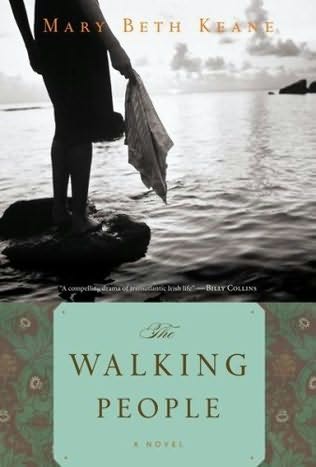
The Walking People


I haven't made or kept any New Year's resolutions in quite awhile. I haven’t read the 50 Greatest Books of the 20th Century (my 2000 resoution), gleaned from several turn-of-the-millenium lists on the internet. (Well, I have read some, but not lately.) I'm doing slightly better with forgotten lit: Viragos, Overlook Books, Persephones, Capuchin Classics, University of Nebraska, Phoenix Fiction, and out-of-print Pamela Hansford Johnsons. I'm behind on worthwhile pop: I have yet to finish R. F. Delderfield's God Is an Englishman, the 1970s romantic-industrial historical novel with the silly title which is my chosen bedtime-reading.

My spring resolution is simple: gamble on more contemporary literature. And I’ve hit the jackpot with Mary Beth Keane’s first novel, The Walking People, which I learned about in Joanathan Yardley’s fascinating review in The Washington Post (I trust him more than most reviewers). He didn’t rave, but he called it “thoughtful and appealing.” And that’s good enough for me from a demanding critic.

Actually, I like it better than Yardley did, but then I like immigrant fiction. There’s been a run on Indian, Chinese, and Russian immigrant fiction lately, but Irish immigrant novels seem to have fallen out of fashion. Keane's engaging, lyrical style has an echo of Irish-American storytellers like Frank McCourt and Alice McDermott. The narrative is very detailed and compelling and gradually quickens pace as the second half of the 20th century catches up with the characters: among the most charming scenes is the description of a celebration of electricity when it comes to rural Ireland in the early ‘60s, the excitement of the young, the fears of the old.

About a third of the novel takes place in Ireland in the '50s and '60s and two-thirds in New York from the late '60s to the present.

The prologue begins in 2007, with Irish-American Michael Ward’s retirement from work as a “sandhog” - digging water tunnels- in New York City after 37 years. No one throws a party, as he’d vaguely hoped, and only one friend takes him out for a drink. We learn that Michael started life as a traveler, or gypsy, in Ireland - a well-kept secret - and after he decided he’d like to settle down, worked on the Cahills' farm in an isolated part of Ireland, and then emigrated to America with two young women, Johanna and Greta Cahill.

Then, in Part One, we backpedal to rural Ballyroan, Ireland, in 1956, where we learn the story of Johanna Cahill, the mother of Michael's first child, and her younger sister, Greta, who becomes Michael’s common-law wife in New York. Johanna is adventurous, the one who initiates mischief as a child, but Greta, the cautious youngest daughter, is considered simple and backwards until in elementary school a health visitor discovers she needs glasses and she quickly catches up in school. Years later their father, Big Tom, a farmer, illegally fishes for salmon at night, as his necessary second job, and is tragically killed by an inspector, who shoots him in the dark, having intended to shoot over his head.

Thus begin the hard times for the Cahill family. The two oldest brothers go to Australia, since their mother fears they will be arrested, leaving their other brother ,Little Tom, who has a speech impediment, and their mother to run the farm. Michael works as a hired hand on the farm, and is shortly thereafter seduced by Johanna. The two girls work as maid and cook in a hotel. But because there is no business at the hotel - and there is nobody living in the area - they find themselves out of a job. But when a vivacious Irish New Yorker comes to Ballyroan to bury her mother, the aggressive Johanna schemes to go to New York, with Shannon as their sponsor. She pressures Michael, who is ambivalent. Her mother insists that they take Greta with her.

Michael gets Johanna pregnant - but after the baby, Julia, is born in New York, Johanna runs away, leaving the baby with Michael and Greta. Greta, who works by day at Bloomingdale's, raises Julia as her own, and is always frantic that Johanna will want her back. At one point, Johanna does file custody papers through a lawyer, but schanges her mind. Greta has two other children, but Julia is always special.

This is a very touching family story, capturing the rhythms of daily life, the slow turn of the seasons, marked by dramatic episodes: Greta’s losing her job, though she keeps the shameful reason secret; Michael’s serious injury on the job; and Johanna’s constant quasi-blackmail about Julia.

Obviously there are some conscientious reviewers out there.

Wednesday, May 20, 2009

Peeling History

I peeled stickers off my books. I peeled off my books' history.

The sticker can conjure atmosphere and occasion.

I'm desultorily reading Ruth Prawer Jhabvala's Poet and Dancer, which came from a large urban independent bookstore, a kind of predecessor of Borders, which was wiped out in the mid-90s after Borders came to town. I loved browsing there and then gossiping with friends in the cafe over coffee and brioches. I discovered my favorite Margaret Drabble books there, The Radiant Way trilogy.
"These are for women in my age group, not yours," the exotic owner with the kohl-lined eyes told me. (Flattery...!) It was a dark city, goblinish really, dark enough to match Drabble's London.

On a break from Jhabvala, I'm reading Sense and Sensibility in a Modern Library paperback, which was purchased at Borders by my husband, who felt sorry for me having to read Austen in an enormous Complete Austen works with chocolate-stained pages from my adolescence. No more big indie bookstores with Austen! We only have two indies here, both with small inventory, neither guaranteed to stock S&S.

I'm a fan of genre fiction: I just don't seem to read it much except in summer. This afternoon I finished a police procedural mystery, Paul Mann’s Season of the Monsoon, which I found at the indie bookstore. Although it might turn up at Borders or B&N, the neighborhood indie owner has a sixth sense for the unusual mystery that might interest the discerning shopper. Set in Bombay, this well-plotted and engrossing mystery centers on the investigation of a murder in Bollywood. This is the first of the Geeorge Sansi mysteries, and he is a memorable character, the son of a famous Indian feminist and an English general, an Oxford-educated lawyer who joined the police force and has integrity in a corrupt system. I read mysteries mainly for the puzzle and characters, and almost couldn't finish this: the last third of the novel was too graphic.. It is an excellent police procedurals, but there is a reason I read few of them.

I'm trying to read more contemporary novels. After I read Jonathan Yardley's thoughtful review in The Washington Post of Mary Beth Keane’s The Walking People, I ordered it from Amazon. I'm halfway through it and extremely impressed and entertained: the story of Irish immigrants in America, beginning with Michael Ward's retirement and then backpedaling 50 years to tell the story of his wife Greta's childhood in Ireland, his as a traveler, and the strong will of Greta's sister Joanna which brought them to New York.

So...the history of four books and where I got them...One automatically bought independent before Borders and B&N gobbled up the scene. Of course some of the indie employees were kept on a part-time basis with no benefits and gladly jumped ship to Borders. It wasn't all an indie romance. A few of the old indies have hung on, but shopping has diversified. Accustomed to B&N coupons, one is shocked to buy four paperbacks at the indie for $45. Shopping is an important decision...some feel corporate bookstores are as exploitative as Wal-Mart. I cross my fingers and hope not. My house is an Amazon-guilt-free zone - meaning I buy from Amazon and feel no guilt because I can't get everything I want from local indies. So I support them ALL on my shopping days.

Sunday, May 17, 2009

How I Became a Holy Mother and Other Stories


Ruth Prawer Jhabvala is one of those writers you know even if you don’t. She is best known for her fiction about India, particularly her stunning novel, Heat and Dust, which won the Booker Prize in 1975. But she is FAMOUS for writing Merchant-Ivory films: she won two Oscars for Best Screenplay, first for A Room with a View, and then for Howards End (the E. M. Forster industry throve as strongly in the '80s and '90s as the Jane Austen mill does now).

Jhabvala’s books have lined my shelves for many years. During my student years I read Heat and Dust and Travelers several times. My then-beau was fascinated by India and brought her work to my attention. Always an energetic whistle-blower journalist type, I was fascinated by Jhabvala’s portraits in Travelers of women who were conned by corrupt gurus; and loved Heat and Dust for its interlocking tales of two generations of women, a grandmother and granddaughter, who defied stifling convention by having love affairs with Indians. In the ‘70s and ‘80s people sought - god knows what they sought - but there was much optimistic travel, exploration of eastern religions, and yoga (we were all flexible then) - hoping to solve the problem of emptiness in a competitive, materialistic society.

Jhabvala understands the irony and naiveté of such religious and philosophical quests: traveling among the poor, ill, suffering, crippled, and starving in India can be a dismaying experience for idealists, though of course others appreciate the beauty, love the diverse culture, make friends, and find religion, just as they’d hoped. In her introduction to her 1976 collection of stories, How I Became a Holy Mother and Other Stories, reissued last year by Capuchin Classics, she writes:

I had better say straightaway that the reason why I live in India is because my strongest human ties are here. If I hadn’t married an Indian, I don’t think I would ever have come here for I am not attracted - or used not to be attracted - to the things that usually bring people to India. I know I am the wrong kind of person to stay here. To stay and endure, one should have a mission and a cause, to be patient, cheerful, unselfish, strong. I am a central European with an English education and a deplorable tendency to constant self-analysis. I am irritable and have weak nerves.

How I Became a Holy Mother is a beautiful collection of short stories, in which Jhabvala explores the lives of Indian film stars, singers, wealthy older women, students, housewives, spinsters, and other unique characters. Some of these characters are contentedly ensconced in extended families, while others restlessly seek fulfillment outside the demarcations of tradition. In my favorite story, “Rose Petals,” the narrator, the wife of a cabinet minister, enjoys the leisure and comforting repetition of events of daily life and visits from her unambitious brother-in-law, Biju, while her husband and daughter slave on important social issues and cannot understand her indifference.

The Minister is very keen to ‘move with the times.’ It has always been one of his favorite sayings. Even when he was young and long before he entered politics, he was never satisfied doing what everyone else did - looking after the estates, hunting and other sports, entertaining guests - no, it was not enough for him. When we were first married, he used to give me long lectures like Mina does now - about the changing times and building up India and everyone putting their shoulder to the wheel...only I did not listen too closely...


In “An Experience of India,” an Englishwoman in India, upset by her journalist husband’s indifference to alternative life-styles, travels alone, enjoys casual friendships and love affairs, but destroys her sense of freedom and adventure when she and a lover, out of money, return to live unhappily with her husband.

And in the title story, “How I Became a Holy Mother,” an English model, “fed up with London and the rest of it,” moves into an ashram and has an affair with a designated guru.

These are such good stories. i’ll now have to rifle through my bookshelves for the rest of her books. I know I have The Poet and the Dancer somewhere...

Friday, May 15, 2009

Jeff in Venice, Death in Varanasi


A few years ago I read Out of Sheer Rage, Geoff Dyer's original hybrid-memoir/literary meditation about his procrastination writing about D. H. Lawrence. Committed to the project, but too busy dithering about where to live to take his work seriously (or at least so his meta-self claims), he is dismayed at the prospect of rereading the novels, and inexplicably prefers the letters. This eccentric preference makes sense as Dyer’s blase, offbeat voice meanders along, like a seemingly effortless, charming, witty, book-length letter. He goes on and on about himself, then suddenly tosses in quite a few facts and insights about Lawrence, without appearing to do any work. As he writes the book, he retraces at least some of Lawrence’s travels with his girlfriend in search of inspiration. And of course he does paradoxically write a lot about Lawrence in the process of not writing about Lawrence. I remember being delighted when he finally views Lawrence’s paintings in a motel gallery somewhere in New Mexico (I think) and says how bad they are. There are some limits to his love of Lawrence.

Dyer’s witty new novel, Jeff in Venice, Death in Varanasi, has received a lot of press, but I resisted the press: why I don’t know. This novel turned up serendipitously at a suburban library where I took a bicycle break, and as I began to read, I realized that I’ve wasted a lot of time NOT reading Geoff Dyer. Jeff in Venice, Death in Varanasi is absolutely a literary turn-pager. James Wood of The New Yorker wrote an enthusiastic piece in the April 20th issue, and his intelligent essay gives you all the background on Dyer you need.

Dyer’s amusing, polished, jesting self-denigrating novel is divided into two parts, one set in Venice, the other in Varanasi. Jeff Atman, the protagonist (at least of the first part; there’s some controversy about the second part, where the voice switches to a first-person unnamed narrator, but I’m betting on his being Jeff, too), is a middle-aged freelance writer who hopes ironically never to have to churn out a “think” piece about art again, though he needs the money. The day before he flies to Venice to cover the Biennale (an international art event), he walks along Marylebone High Street, musing on his discontent. As he looks into the window of an expensive hairdresser, he decides impulsively to have his hair dyed: perhaps this have something to do with “dyeing” Jeff Atman so he is not Geoff Dyer? (Clumsily I meta along.) His hairdresser quotes Sylvia Plath.

Dyer writes:

He had never paid more than ten pounds (with tip), had not had his hair cut anywhere but a barber’s for thirty years, not since the unisex craze of the mid-seventies, and, most importantly of all, he didn’t need a haircut. But here he was, opening the door, taking the first steps towards doing something he’d been thinking about for years: getting his hair dyed. For a long time he’d thought of gray hair as a symptom, a synonym of inner dreariness, and had accepted it, accordingly as inevitable - but all that was about to change.


Dyeing his hair boosts his confidence and is perhaps a factor in helping him get the girl. In Venice he has an idyllic affair with beautiful woman who works at an art galley in California and who matches him quip for quip in Nick-and-Nora-style dialogue. They're amazingly compatible, though usually hungover, because they get drunk and do cocaine at the art opening parties before going back to their hotel rooms to have oral sex. It’s very, very funny, but is also a sensitive account of a love affair. Dyer knows the parties and the art talk, and we feel as though we're there: in his acknowledgements he explains that he has attended three Biennales.

The second part, set in Varanasi, is the reverse of Venice in many ways, but this assignment also gives the freelance writer character a chance to escape himself as he becomes increasingly immersed in the culture.

Very entertaining. Booker Prize-worthy!

Thursday, May 14, 2009

The Lace Reader


Brunonia Barry’s The Lace Reader is one of those popular word-of-mouth-novels-with-a-corporate-Cinderella-spin that I really want to like. The indie bookstore owner was enthusiastic. “You’ll love this book! It’s perfect summer reading. The author originally self-published it, then was discovered, and then the book was auctioned in a bidding war and became a best-seller. ” She smiled at me nervously. She wasn’t quite sure of her customer: you could see that. She knew me on the basis of my buying a pretty strange bouquet of books even for me, which included The Arabian Nights, The Volcano Lover, a Robert Barnard mystery, and something with a pretty cover called The Snow Fox.

“Oh, add it to the stack,” I said airily. “I certainly can support a book that one-upped the corporate world.”

And I can. Let’s call this Support Women’s Book Group Month.

The Lace Reader is a fast-paced novel of the kind one can devour as fast as a chocolate bar. Set in witch-haunted Salem, Mass., it’s very plot-oriented and atmospheric, part mystery, part magical, part Salem travel guide, part social issue novel. The sassy, witty narrator, 32-year-old Towner Whitney, returns to Salem from L.A. when her Great-Aunt Eva, a psychic who runs a ladies’ tea room and teaches children’s etiquette classes, disappears. A self-proclaimed crazy person who is psychic as well as sometimes psychotic, Towner left the dysfunctional family to avoid eccentricities like "lace-reading," a fortunetelling gift shared by the Whitney women: Aunt Eva sees pictures in the lace, and so can the other women in the family if they try. But Towner, who was hospitalized for depression after her twin sister, Lyndley, committed suicide 17 years before, has bad associations with the lace. She has had her share of hallucinations and carries an expired anti-psychotic pill as a mental health charm. Her brother convinces her to come home to their dysfunctional family in Salem.

The narrator’s staccato voice is fun and eccentric.

“...anyone would admit that it is the women of the Whitney family who have taken quirky to a new level of achievement. My mother, May, for example, is a walking contradiction in terms. A dedicated recluse who (with the exception of her arrests) hasn’t left her home on Yellow Dog Island for the better part of twenty years, May has nevertheless managed to revive a long-defunct lace-making industry and to make herself famous in the press. She has gained considerable notoriety for rescuing abused women and children and turning their lives around, giving the women a place in her lace-making business and home-educating their children. All this from a raging agoraphobic who gave one of her own children to her barren half sister, Emma, in a fit of generosity because, as she said at the time, there was a need, and besides, she had been blessed with a matching set.”

Towner, too, is very conscious of abuse: her violent uncle beat Aunt Emma so badly she has brain damage, and he drove Towner’s twin to what looked like suicide (perhaps it’s murder: I haven’t finished the book yet).

And parts of the novel are narrated in the 3rd person by an attractive cop who was a friend of Aunt Eva and is investigating her death.

The novel is enjoyable, if a bit choppy. It’s never saccharine, because of Towner’s mordant, funny voice and point of view. Sometimes it’s comical, other times eerie. I don’t know where it’s going.

As so often happens, I read two-thirds of a contemporary novel and then discover I have nothing in common with it.

It doesn't mean it's not good in its way, though. And I sincerely wish Barry a lot of luck.

Tuesday, May 12, 2009

Reading-in-Public Etiquette


What should you read in public? Must it be chic and discreet?

Absolutely. A trip to the coffeehouse or bistro demands a book as the ultimate accessory, because not only does it define your persona but it also keeps you company while you sip and smoke. You can be as slobby in attire as you want so long as your book looks good -there is no need to dress up in a pink skirt and madras shirt, like the preppy lady on the left with the scone habit, nor to flex tattoos under an REM T-shirt, like the 30ish gentleman in the sunglasses who is texting a novel on his cell phone. You simply sit there with a book and ARE COMPLETE.

So what is the book going to be? The book makes a statement - but the hilarious thing is that nobody knows what that statement is except you. God Is an Englishman? No, it weighs a ton, plus does that say you’d rather be wearing that preppy skirt? Nuruddin Farah’s Maps? You really, really want to read this Somalian classic about a boy orphaned in the Civil War between the Somali and Ethiopia, but it is best to savor it in an environment without distractions. (You just found this in your bookcase and it is now No. 1 on the TBR, but not yet ready to go out of the house.)

How about an Agatha Christie? Can’t be done. Why? Because your upper-crust in-laws don’t allow you to read mysteries unless they’re in a foreign language. (You’re not joking about this. If it’s not on Jane Smiley's or Harold Bloom's canonical lists, these guys are not going to be reading it any time soon.) Christie does say you’re kind of cool, though. It is a universal language.

In the end, because you are reading three or four books at a time, you bring two - both contemporary novels - both poetic romans a clef you picked up because they complement each other. The first: Branwell by Douglas A. Martin. This very short novel about Branwell Bronte reads like a spare prose poem, recounting the loss of mother and older sister and then progressing to Branwell’s, Charlotte’s, Emily’s, and Anne’s first writing experiences, the invention of complex identities of their toy soldiers, their battles, imaginary countries - recorded in minuscule books which can fit in the soldiers’ hands. Branwell, artistic and dilettantish, is thought to be the hope of the family, but starts drinking at a young age and... there’s tragedy ahead...

And there is tragedy in Susan Sellers’ Vanessa & Virginia, a short novel written from the point of view of Vanessa Bell. Fans of Bloomsbury will be fascinated by this poetic account of Vanessa’s painting, her ambivalent relationship with her difficult diva of a younger sister, Virginia Woolf, and her long, somewhat shocking love affair with Duncan Grant, an artist who prefers men and has a series of homosexual affairs. Broken into a series of short, beautifully written sketches, the novel reflects Vanessa's creative work, and her voice is lyrical yet obviously not competing with the brilliant Virginia's.

So you have your choice at the coffeehouse.

And afterwards you make a stop at the indie bookstore, where unfortunately you find a few more things you want but decide not to buy the only one that would make sense, Outcaste, or maybe The Untouchables (I've forgotten the title), a Penguin you will doubtless never find again... And then it's out with no bag and yet more publicly displayed books to stuff in your pannier.

Friday, May 08, 2009

The Hireling

“The past is a foreign country: they do things differently there.”

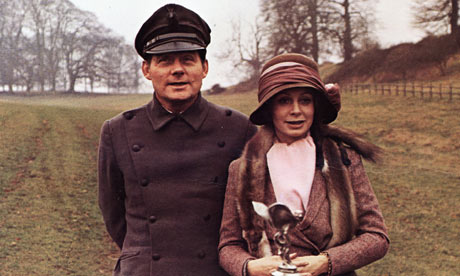
That memorable opening from the brilliant novel, The Go-Between, was my introduction to L. P. Hartley’s lyrical, exquisite prose. Julie Christie and Alan Bates, who starred in the film adaptation by Harold Pinter, decorated the cover of my old Penguin (found in a musty bookstore and lost somewhere in the house). Years elapsed without my reading more Hartley: book-buying was different in pre-internet days. Happily, Hartley is in print again. NYBR has reprinted the Eustace and Hilda trilogy. And Capuchin Classics has reissued another gorgeous Hartley novel, The Hireling, an elegant, disturbing, complex, psychological masterpiece which examines class barriers, isolation, and sublimated desires.

One of the most striking aspects of The Hireling is the number of scenes which take place in a car, where the relationship develops between Leadbitter, a bitter ex-solider who makes his living as an independent hire-car driver, and Lady Franklin, a fragile young woman recovering from a breakdown after her husband’s death. This tale of a driver and a lady is vaguely, slyly reminiscent of Lady Chatterley’s Lover, though Hartley’s ex-soldier, Leadbitter, is a sexless mercenary, and Lady Franklin is an ingenuous, sexless widow.

Lady Franklin, obsessively, excessively grieving for months because her husband died while she was enjoying herserlf at a party, hires Leadbitter to drive her to various cathedrals (as a homage to her husband, who loved architecture). During their first meeting, she pushes class boundaries by sitting in the front seat, which slightly irritates Leadbitter . And, as often happens in such situations with strangers, she finds herself confiding in Leadbitter rather than a friend, focusing on her depression, guilt, and solitude since her husband’s death.

Leadbitter, who dislikes women, is not overly moved. But when Lady Franklin, attempting to keep the conversation going, asks him about his life, he makes up a story about his imaginary family, a wife, Frances, who resembles Lady Franklin, and three children.

Both become addicted to these conversations.

And eventually things get out of hand, because Leadbitter blurs the image of the imaginary wife with the real Lady Franklin, after she gives him a large sum of money to solve an imaginary problem. And, ironically, as Lady Franklin begins to withdraw, he believes that that Lady Franklin’s interest in him is more than superficial.

The Hireling was made into a movie in 1972, starring Sarah miles and Robert Shaw. I'm looking forward to renting it.

God Is an Englishman


If only the title weren’t God Is an Englishman!
This has caused much mirth in my family. There are many variations on this floating around our house.

“God Is a New Yorker.”

“God is a Muscovite.”

All right already.

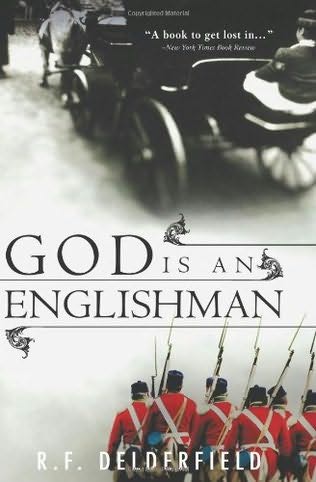
This diverting historical novel by R. F. Delderfield, author of To Serve Them All My Days (reviewed here), is a compelling read, the work of a fine craftsman, and the kind of book one would like to read in one day “in the horizontal position,” as Laurie Colwin used to describe her characters’ lounging reading habits. Set from 1857-1866, the 687-page novel, the first of a trilogy, kept me up till 1:30 this morning. Call R. F. Delderfield Scheherazade. One doesn’t want to finish too soon.

Delderfield is a plain, good stylist- nothing wrong there - but it is his strong, likable, believable characters and sweeping sense of history that set his work apart from that of less successful popular novelists. The hero, Adam Swann, a disillusioned soldier who has witnessed massacres in India, returns to England determined to quit the military and become an entrepreneur - and has the means to do so because of a ruby necklace he pocketed when he was knocked off his horse in India, the enemy owner having been killed.

Fascinated by the Industrial Revolution, Adam wants to travel around England before committing to a career. But a chance meeting with a railroad administrator determines the course of his life. Informed that the railway doesn’t stretch to every part of England and transportation of goods is difficult, he decides to organize his own transport business, rather like the trucking businesses of the future.

Adam isn’t the only leading character. There's also the extraordinary Henrietta Rawlinson, the daughter of a manufacturer whose main purpose is to break the unions after a long strike. On the way home to his father, Adam witnesses Sam Rawlinson's murder of a boy during a riot. And shortly afterwards Adam meets Henrietta, who is running away from home, not because of the rioting but because her father is determined to “sell” her in marriage to a rich repulsive man with clammy hands who bores her. And Adam, much amused by her, takes her home to his Aunt Charlotte to decide what to do with her. (The two marry.)

Then there’s Keate, Swann’s wagonmaster, a retired soldier and inspired preacher who rescues orphans from “baby farms” and attempts to turn their lives around. It is his scheme to train some of them to work for Swann. Keate is absolutely Dickensian - an ingenuous, sweet giant who is absolutely loyal.

This novel is so much fun- and there are two more to go. The book is still in print, thousands of copies floating around. But if only they'd changed the title for the American edition...

Wednesday, May 06, 2009

Readable Garb

">

It's Day 2 of my cold: I spent a wretched morning abusing Vicks and peppermint tea. To cheer myself up, after hours of sneezing, I threw my contaminated shirt into the laundry and donned my favorite Edward Gorey reading t-shirt. Although a stylish friend informs me it is a fashion no-no to wear clothing one can read, i don't hesitate to flaunt Gorey's version of "Too Many Books..."

It occurs to me that a complete reading wardrobe could be furnished with the following t-shirts .


Here's an appropriate tee for the next time someone athletic attempts to recruit you for a volleyball game (or other nightmarish sport):


For the first beach-reading day (whenever your vacation starts):


And when you're feeling political:


Of course there are many, many more. You can also print your own.

Doesn't this READ like someone with a cold? and who cannot procure cold medicine? The effective stuff was pulled from the shelves a couple of years ago because meth entrepreneurs chose to mine it for now-controlled-substance ingredients... Ugh, ugh ugh!


Monday, May 04, 2009

Confessions of a Jane Austen Addict


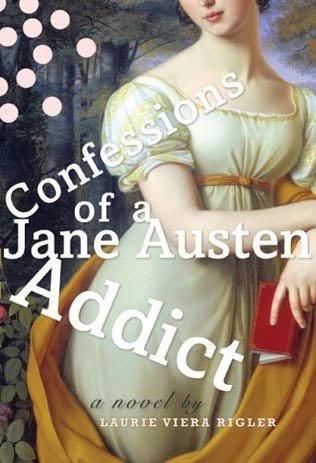
It’s not swine flu, but I have a cold - so I have cosseted myself this afternoon with a delightful comic novel, Laurie Viera Rigler’s Confessions of a Jane Austen Addict, which is the charming literary equivalent of a cup of camomile tea.

Why haven’t I read this before? Have I been resisting each new comedy with a Jane Austen title simply because nothing could be better than the real thing? In a world of Jane Austen sequels, mysteries, and a Pride and Prejudice vampire best-seller (scary concept!), this is the first time-travel Austen novel I’ve come across. Rigler's charming cocktail of fantasy, Regency romance, and chick lit is addictive, as the heroine discovers that love affairs of the past are as enthralling and unfathomable as those in the 21st century.

The premise is original: the witty narrator, Courtney Stone, falls asleep rereading Pride and Prejudice, and awakens in in the body of one Jane Mansfield, another Jane Austen reader, in Regency England. Like Courtney, Jane is 30 and unmarried. Like Courtney, she doesn’t have the best taste in men (Courtney has just broken up with a cheating fiance, whom she caught in flagrante delicto with the wedding cake baker). Jane also has a match-making mother who believes it is a disgrace to be single.

Courtney doesn’t know if she is dreaming or crazy. But reality gets solider and weirder: when she regains consciousness in Jane's body three days after the real Jane had a fall from a horse, a doctor bleeds her for “brain fever” -and she is lucky to get away with that, because her 21st-century witticisms convince him that a permanent move to a mental asylum is the answer. She is appalled by 19th-century underarm odor, which is inadequately masked by perfume. And she frets over the social mores for ladies, which require her, even at 30, to be chaperoned. The details of everyday life for women are not as romantic as those in her Austenian imagination.

Rigler comically interweaves the narrative of Courtney'’s trials and tribulations with reminiscences of her free but lonely life in 21st-century L.A. In Austen's England, Jane’s pushy mother acts as a quasi-procuress for her eager suitor, Mr. Edgeworth, a minister: shades of Emma, but he is completely unlike Mr. Elton, though Courtney broods on the similarity of the situations. She learns, by flashbacks and a friend’s warnings, that he may be a libertine who has impregnated the maidservant. Yet he’s so handsome and sophisticated that Courtney admits that her “palms are sweating and (her) throat is dry.” So she muses on blind dates in the 21st century.

It’s not like I’ve never been in blind-date situations before. But I’m one of those people who hates them and always has to be tricked into it by being invited to some gathering at which I just happen to be introduced (as if it hadn’t all been planned ) to the potential man of my dreams. These particular MOMDs have ranged from the computer nerd with the handshake that felt like a limp sea anemone to the performance artist whose magnum opus was licking dry a dozen opened cans of smoked oysters. Even though I usually feel not the slightest bit of interest in the man who has been summoned to the party, the dinner, or the art opening by the well-meaning friend, I always stupidly agonize over what kind of impression I’ve made on the would-be suitor.


There are countless clever allusions to Austen's novels; there is even a trip to Bath (what is a Jane Austen novel without a trip to Bath?). Rigler’s humorous light romance has got me hooked - I keep thinking it would make a great movie. The sequel, Rude Awakenings of a Jane Austen Addict, about Jane’s experiences in Courtney’s body in the 21st century, will be published next month.

Sunday, May 03, 2009

Howard Spring


It was a good year for fiction, 1939. It saw the publication of The Grapes of Wrath, The Day of the Locust, some of Dorothy Parker’s stories, Finnegan’s Wake, Angela Thirkell's The Brandons, and the charming How Green Was My Valley, which I recently reviewed here (how’s that for variety?). I am now enthralled by Howard Spring's 1939 masterpiece of pop fiction, My Son, My Son, which is scarcely mentioned anymore. This spellbinding novel examines the effect of a successful writer’s poverty-stricken childhood on his later relationships - especially the bond with his golden, tragically ruined son, Oliver.

Spring’s plain style and chronological storytelling create an unobtrusive framework: nothing distracts from the dry, articulate voice of the narrator, William Essex, a successful writer who has climbed up from poverty and now unflinchingly and unsentimentally scrutinizes his past relationships. His early experiences are Dickensian, without the verbal flourishes and the exaggerated comedy. During his childhood, his mother took in washing: when Bill picked up the laundry bundles, boys taunted him and often beat him up. At 12, Bill meets a kind, intellectual minister, Mr. Oliver, who employs him for the next five years and teaches him to read. When he commences work as an office boy, he meets the most important, faithful friends of his life: he rooms with the O’Riordans, who read Dickens aloud after dinner, and their son, Dermot, who is an Irish radical patriot who has never been to Ireland, an artisan who dreams of making furniture as beautiful as that of William Morris.

Some elements of My Son, My Son are autobiographical. According to Wikipedia, Howard Spring’s mother did take in washing after his father’s death, and at 12 he left home to work for a butcher; later he found a job as an office-boy, and eventually became a journalist for the Manchester Guardian and wrote novels.

Whether the rest of the novel is autobiographical I couldn't say. Bill ruthlessly marries for money, Nellie, a conservative baker’s daughter and excellent housewife, and after they inherit her father’s business, he writes: he starts out by selling sensational stories to magazines and progresses to novels and plays. Then, inspired by seeing Dermot's beautifully-crafted wooden toys for his son, he suggests that they collaborate in the toy business. They make a fortune, while at the same time perfecting their respective arts, writing and furniture-making.

These two successful men have realized their dreams. Yet they want their sons to help them fulfill their fantasies. We helplessly watch Bill interfere with Nellie and spoil their golden son, Oliver, a ne’er-do-well, who receives every material thing he wants, becomes an accomplished liar and cheater (even stealing a book from his best friend, Rory, Dermot’s son, and later from an office), and lacks his parents intellectual and moral qualities. Nellie attempts to intercede, but Bill wants to provide Oliver with the perfect childhood he never had. Dermot is more faithful to his vision: he marries Sheila, a soulmate who shares his love of Ireland, and his son, Rory, is unspoiled, though Dermot raises him as a radical and perversely ships him to Ireland when he is in teens.

After Nellie’s death, Bill's efforts to provide Olvier with the perfect life intensify . He excuses all of Oliver’s peccadilloes, but they finally fall out over a woman, Livia, a shallow, mixed-up, talented musician/designer who flirts with father and son and agrees to an engagement with Bill. As she is much closer in age to the beautiful Oliver than to Bill, it is clear that Bill is making an error. Oliver moves out and refuses to see his father because of the engagement. And the tragic loss of his son is the greatest grief of Bill's life.

My Son, My Son is also about fathers and daughters, politics, and war. This well-written, well-plotted, fast read of a novel creates a believeable world and is one of the most memorable I've read this year.

Wednesday, April 29, 2009

Rogue Herries


I’m sitting on the couch, with that reader's absent-minded look of of being lost in another world. I haven’t gotten up for hours, because I’ve been transported to a house in 18th-century England outside of Cheswick (my book has a map), with Francis Herries, hero of Hugh Walpole’s magnificent historical novel, Rogue Herries.

Walpole’s 700-page magnum opus is exactly the thing to read on a damp gray day. i’m hooked on this tetralogy about the flamboyant Herries family, which follows the clan from the 18th to the 20th century. In the first volume, Rogue Herries, we meet Francis Herries, a strong, exuberant man in his 30s known for his lascivious humor, wild ways, and bad temper, who, having grown restless and disillusioned with city life, moves his family to Herries, a crumbling family house located among hills and moors in northern England. (Yes, it’s a get-back-to-the-land novel.) This bawdy, funny, dramatic novel emphasizes Francis’ commitment to the land and the damp, dark house which the rest of his family hates, but also relates the history of his son and youngest daughter. He earns the nickname “Rogue” when he sells his mistress at a fair (reminiscent of The Mayor of Casterbridge), but his placid wife adores him through adulteries and scandals; his staunch son David grows to manhood unwaveringly loyal, if not particularly intelligent, and with a knack for business; and his daughter Deborah, who is having a clandestine epistolary affair with a minister, fears him. (Only the middle daughter Mary, a treacherous, dull girl who moves to Cheswick to live with another branch of the family, dislikes him.)

Francis falls in love with a teenage gypsy, Mirabell Starr, and his adoration of her beauty and wild character make him determined to wait for her until she is is ready a decade later to move in with him. The marriage is one of convenience: she doesn’t love him and makes it clear. She has had a tragic past, and for years pines over a dead lover.

Walpole’s frequent allusions to Shakespeare, Richardson, Fielding, Hardy, and Bronte give you a hint of the tone. At one point, three women discuss the merits of Richardson and Fielding: the two sexy ones vote for Tom Jones. At another point, the tragic Mirabell becomes an itinerant actor in a Shakespearean company. Walpole’s style is so lively and his narrative by turns so playful and compelling that one races through this novel.

Here is an example of his lively description of a “good witch” in 1774 compared to a “bad witch” hunted and drowned earlier in the novel (the first of several paragraphs about her) :

Mrs. Henny was a southern woman who for ten years had been living a widow in Grange. She was a lady of all trades - nurse, midwife, cook, friend of all the world and, in the modern manner, a witch. One may see how different the modern manner (temp. 1774) is from the old, because whereas, years ago, Mrs. Wilson had been persecuted and drowned, Mrs. Henny was the most popular woman from Seathwaite to Portinscale.


This romp is very different from Mr. Perrin and Mr. Trail, the first Walpole I read, recently reissued by Capuchin Classics and reviewed here. Rogue Herries reminds me very slightly of one of those huge John Cowper Powys books. Walpole wrote much, and not always as well as here, according to critics, but I'm very much looking forward to the other Herries books (used Pocket Books editions abound on Amazon, or you can opt for new editions published by Frances Lincoln Limited ).

Sunday, April 26, 2009

A Meaningful Life


If you’ve been living in a cave, or depending on bookstores with a limited stock of reprint publishers, you may be unfamiliar with the NYBR series, which includes stunning titles like Rebecca West’s The Fountain Overflows, Sylvia Townsend Warner’s Lolly Willowes, Tatyana Tolstoya’s The Slynx, and Richard Hughes’ The Fox in The Attic. The latest addition to the series, L. J. Davis’s A Meaningful Life, is stellar: a comic masterpiece with disturbing elements, it follows the career of Boise-born Lowell Lake, an editor for a plumbing trade newspaper in New York, who wakes up one day at 30 with the epiphany that he’s wasting his life.

Who hasn’t had this revelation after a certain age? And what do you do to overcome it? In Lowell’s case, he buys a crumbling mansion which needs a total overhaul, in a dubiously gentrified Brooklyn neighborhood. His wife opposes this, and who could blame her after their tour of the filthy 22-room house, which has been a decrepit rooming house for quite a while? She announces that she'd prefer a trip to Aruba. Although they don't move to Brooklyn, Lowell satisfyingly spends his evenings at the house smashing partition walls and cleaning sludge from the basement, once the eccentric tenants are evicted.

He becomes obsessed with the life of the original owner, Collingwood, a rogue who was involved in many dubious business deals and lawsuits, and at one point fled to South America the day before the collapse of the Far Western Trading Association, leaving his partner to take the blame.

Since Lowell is a responsible, nice, law-abiding middle-class citizen, his fascination with Collingwood is a sign of his new determination to live wildly, whatever the cost. He's even disappointed that Collingwood was a heroic Civil War soldier. In his fantasies, he wants his Brooklyn counterpart to have led a totally disreputable life. And though Lowell is drunk all the time while working at the house, or swigging gin while watching Patty Duke reruns at home, it’s clear that he doesn’t know quite what he’s doing with a house in a mostly poor black neighborhood: the neighbors sit on the steps at all hours drinking and laughing, and the only people he can really relate to are the contractors he finally hires.

Each NYBR novel is introduced by a writer who champions it, and in this case Jonathan Lethem's enthusiastic essay about his personal friendship with Davis, having been the best friend of Davis's son while growing up in Brooklyn, can sell you on this book far better than I can. It makes you want to buy a house in Brooklyn. This 1971 novel is a smoothly written, quietly funny American classic.

You can read Lethem's introduction and the first chapter of A Meaningful Life here.

Thursday, April 23, 2009

The Spy Game


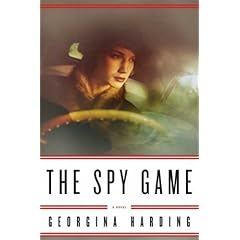
Georgina Harding’s The Spy Game is a brilliant novel - one of the best contemporary novels I've read this year. As newspapers in economic slumps cut their book sections, it becomes more and more difficult to sift through the new books. Harding is an extremely entertaining and subtle writer - though this is not a spy novel, if that's what you're looking for.

The Spy Game is a luminous novel about identity, childhood, and history, centered on the imagination of two English children whose German immigrant mother dies in in 1961. The narrator, Anna, on the eve of a trip to investigate her mother’s history in the former East Germany, vividly recalls her childhood grief, when she, at eight, was in thrall to her older brother Peter’s conviction that their mother was a spy. Harding winds in and out of time and portrays Anna’s sensibility and inventiveness from a canny present and credulous past point of view. Peter’s irritating reactions are sympathetically presented by the adult Anna, who realizes that their mother’s German identity led to the bullying of Peter at school - the condemnation of Peter as a “Nazi” by his peers.

Harding’s extraordinarily clear style smoothly intermingles the complex children’s fantasy with real and imagined history: the Kroger spy case, written about in the newspaper two days before their mother’s death, is the catalyst for Peter’s theories that their mother is alive and may have gone back “behind the iron curtain.” Ambivalent about the spy hypothesis, never certain whether it is true or a game, Anna is frightened by Peter’s obsession. As he points out, there is no proof of their mother’s death: the children were not taken to the funeral.

Although she spends her days with her ordinary friend, Susan Lacy, and the rather dull Mrs. Lacey, Anna cannot escape remembrance of her own mother. The piano pieces she reluctantly learns from her German-Jewish music teacher begin to terrify her, as she mixes them in her mind with Miss Cahn’s reminiscences about childhood in Germany (which in some ways parallels that of her own mother’s). Anna eventually gives up playing because she refuses to think about the implications of Germany. But lMiss Cahn’s fate is intertwined with hers. Peter spies on her, ironically convinced that this lonely German refugee also may be a spy (because she is German and entertains German friends).

The piano teacher’s house was at the other end of the village on a street that led out towards the main road. It was a plain street squeezed up against the hillside, the houses all much the same, stone houses with narrow windows right on the pavement that you could see into, china ornaments arranged on the sill for you to see, empty armchairs in neat front rooms. Sarah Cahn’s was set back from the rest by just a few steps, so there was space for the plants that grew up the walls and hung close about the windows that time of year.


What Anna learns about her mother many years later in the former East Germany is not what she expects. But the pieces of the puzzle, which she realizes can be put together in many ways, help her assuage her grief.

Wednesday, April 22, 2009

How Green Was My Valley


A 1939 best-seller, Richard Llewellyn's How Green Was My Valley has never been out-of-print, and is adored by over 40 Amazon readers, many of whom laud it as a classic: if it is not a classic, it is truly a magnificent novel about life in a Welsh mining town at the turn of the century. Narrated by Huw Morgan, who looks back nostalgically at his childhood in the beautiful valley, this gem of a novel idealizes the Morgan family as a hard-working, joyful laughing, chorus-singing family of stubborn men and women, which splits over the radical sons' union politics and and Dada’s preference for management negotiation. When the brothers move out, it is the dauntless mother’s intercession which reunites them.

Seen through the eyes of a child, politics are interwoven with relationships and the the environment. Slag heaps spread and begin to spoil the beauty of the valley and poison the trout in the river by the slag. Although Huw’s father has recommended that the slag be hidden underground, the management ignores him. Wages drop and grim strikes sometimes lead to starvation and death, but the miners, crushed by greedy management, strike for their lives and end up with an inadequate minimum wage.

But Richard Llewellyn, known best for his lyrical style, humor, and his poetic, environmentally-forward-looking descriptions, writes beautifully:

When birds were nesting we often went out to find the nests and look in at the eggs, though we never took any, mind. My father would never allow me to collect them, and he would stop the other boys, too. I think because of that, our Valley was never quiet of birds. There is strange you will never notice birds till they are gone.


We love brave Huw, who is so curious about secret union meetings that he sneaks out at night. Crippled during a wintry night when he and his pregnant mother are caught in a blizzard, he is unable to walk for a few years: but it is worth it, because his leading his mother up the mountain to speak to the union on behalf of Dada (I defy you not to cry over this scene) saves Dada from death threats . Mother collapses on the way down and Huw must likewise save her by dragging her back to the bridge in the white-out, where his brothers can find them.

Huw’s observations of his older brothers and sisters, their successes, romances, and tragedies, are moving. (Tears have been shed over my Penguin: think how many tears have been shed over library books!) When their friend Marged’s father catches Huw’s brother, Owen, kissing her, he makes a laughable scene in front of the village and Owen, humiliated, refuses to marry her. Another brother, Gwilym, marries Marged. She goes mad. In one of the saddest scenes i’ve ever read, Marged mistakes Huw for Owen and threatens him. It’s very Wuthering Heights-y: she pines for Owen as Catherine does for Heathcliff. But her hallucination hurts her incredibly and leads to a tragedy.

There is so much more to this than plot. It is a real "page-turner," but also lovely and vivid.

Friday, April 17, 2009

A Tale of Two Families


Dodie Smith’s A Tale of Two Families is the fifth and rarest of her novels, and if I hadn’t set out to read her entire oeuvre, I would never have unearthed it. Perhaps the library didn’t stock it. I was familiar with three of her other titles: I Capture the Castle (everybody’s favorite girlhood book), The Town in Bloom, and It Ends with Revelations. But the two best, The New Moon with the Old, and A Tale of Two Families, never appeared on the shelf, or were stolen by mischievous girls in capes (our look back in the day--not that I stole, but I once lost a copy of Ozma of Oz, and refused, in some strange act of civil disobedience, to pay the fine. "I don't pay taxes: I don't owe the money," I announced dramatically. I lost my library card).

This beautifully-written short novel hinges on the decision of two middle-aged sisters, May and June, to move their families from London to the country to live in two neighboring houses, the Dower House and the cottage. Although the houses are beautiful, they are somewhat leery about the move, and with good reason: The sisters are married to two attractive brothers, George, a philandering, wealthy businessman, and Robert, a writer, and attractions flare up with the proximity of the two families.

When May and June’s mother, Fran, comes to visit, this tactful, experienced, seventy-something character unobtrusively becomes the most interesting character in the novel: she has a knack as an observer for solving problems and her wry, sensible interior dialogues about family life balance some of the crazier goings-on (particularly when her sister, Mildred, arrives: Mildred goes around dressed like Little Bo Peep and fantasizes about and meddles in other people’s sex lives). Fran also befriends Baggy, George and Robert’s father, who has switched from living with Robert’s family to George’s in the country.

There is a long, lovely, totally absorbing description of Fran’s shopping trip in the village, interspersed with amused remembrances of a song about a baby elephant learning to cross the street, and as the traffic is heavy, the song amuses her: she lugs a psychedelic shopping bag with her purchases, a suit and a green toy frog, and a scale which won’t fit in a bag, and has a minor accident that makes her aware of aging.

She stood on the kerb watching a steady stream of cars. (A woman standing beside her said resignedly, “Factory going-home time.’) She could see no pedestrian crossing. How did one get across? If there was a momentary break in the traffic on her side of the wide street, cars on the far side were sweeping past. She noted that hardy souls got as far as the middle of the street and then waited. She’d simply have to do the same...and very nerve-wracking she found it, standing there unauthorized by any island, expecting cars to crash into her behind. Really, this country High Street was more dangerous than Piccadilly Circus. At last! She could make it now if she was nippy. She started out - and instantly saw...a truck....She began to run, or rather, she intended to begin, what actually happened was that she found herself incapable of running. She simply could not run - it was like some nightmare in which one had leaden feet. Run, run!...Somehow, somehow, she staggered to safety only a couple of seconds before the truck swept past. And then, for no reason at all, her legs gave way and she sank to the pavement, dropping everything she was carrying. The clanging scales sounded like a car smash.


Fran is unscathed - but this is the first time she has confronted aging. Yet in many ways Fran seems younger than her daughters.

Everyone comes in pairs: May’s daughter, Corinna, a drama student in London, is in love with June’s son, Hugh, who works in the City, and May is appalled, beleiving they may marry and have abnormal children. But she needn’t worry much, because Hugh, it turns out, is sexually cold, and Corinna has to look elsewhere for sex.

If you like The Hundred and One Dalmatians, there is a sweet dalmatian in this novel! Dodie Smith raised dalmatians herself. There are several love scenes between dog lovers. But I won't spoil it...

Monday, April 13, 2009

Compton Mackenzie


I continue to enjoy Sinister Street, one of the greatest coming-of-age novels, and surely the most detailed narrative about turn-of-the-century education ever written (important for sociological as well as literary reasons). Does formal education or social environment form character? Mackenzie devotes pages and pages to each phase of the hero Michael's childhood and adolescence, weaving in the impact of education at each point. The Penguin Twentieth-Century Classics version contains Mackenzie’s fascinating foreword to the 1949 edition, in which he describes the Daily Mail's successful defense of the first volume of Sinister Street, published in 1913, against two libraries’ attempts to restrict circulation in "the banned book war." Edmund Gosse compared the novel to Proust’s Remembrance of Things Past, and Henry James told Mackenzie in a letter that he had “emancipated the novel.” Mackenzie thought Lascelles Abercrombie in the Manchester Guardian most fully understood Sinister Street : "We seem to be watching that strangest of all modes of evolution: the dissolution of one century’s character to make way for the character of another century.”

I’m still in the Oxford section of Sinister Street ("Dreaming Spires"), and I have to say it brings back some undergraduate memories: the quixotic Michael, having obstinately refused to compete for a scholarship so as to be under no obligations, treats Oxford as a gentleman’s club and does no academic work. it is, of course, a waste of his intellect. We see examples of Michael’s brilliance again and again, yet he refuses to write or express himself except casually, in conversation, though his friend Maurice begs him to write for their jointly-run newspaper; but Michael has some misguided belief that to work would be ungentlemanly. Waugh, of course, does something similar in Brideshead Revisited, though his characters are more outrageous and he is more barbed and humorous about their blatant snobbery and homosexuality. There is humor in Sinister Street - Mackenzie can show us how young and sometimes pompous Michael is - but there isn’t much sexuality. The "good eggs" (as opposed to the "bad men") are all heterosexual, yet we know nothing of their love lives, and Michael wants no sex while at Oxford - a change from his passion for Lily while at St. James in Part 2.

At Oxford Michael grows stuffy and conservative, wanting to live in the idyllic Platonic world without passionate involvement or intellectual commitment. Annoyed by the Catholic church’s new tolerance of Darwinism (the church was important to him during his rebellious period at public school), he prefers to enjoy leisurely lunches,intellectual discussions, readings and rereadings of Don Quixote (the only book that consistently seems to interest him), and rugby and cricket. He assures his former governess, who believes that he has become TOO staid and is in a rut, that he is happy:

“Once I wanted passionately to be like everybody else. I thought that was the goal of social happiness. Then I wanted to be violently different from everyone else. Now I seem to be getting near the right mean between the two. I’m enjoying Oxford enormously. I can’t tell you how happy I am here, how many people I like...I’m so positive that the best of Oxford is the best of England, and that the best of England is the the best of humanity...”


Now he can’t remain in this stasis. Something will shake him out of this. Eventually he does graduate, or at least leave Oxford.

Meanwhile, I am enjoying this and wondering why this brilliant book is out-of-print in the U.S..