It’s a slow Thanksgiving, as it’s meant to be. There is no traffic on the street, a pumpkin pie was won at the Turkey Trot (not by me), the aroma of slowly roasting turkey permeates the house (baste every 15 minutes till the thermometer reads POULTRY) , and I am devoting the day to ‘60s literature.
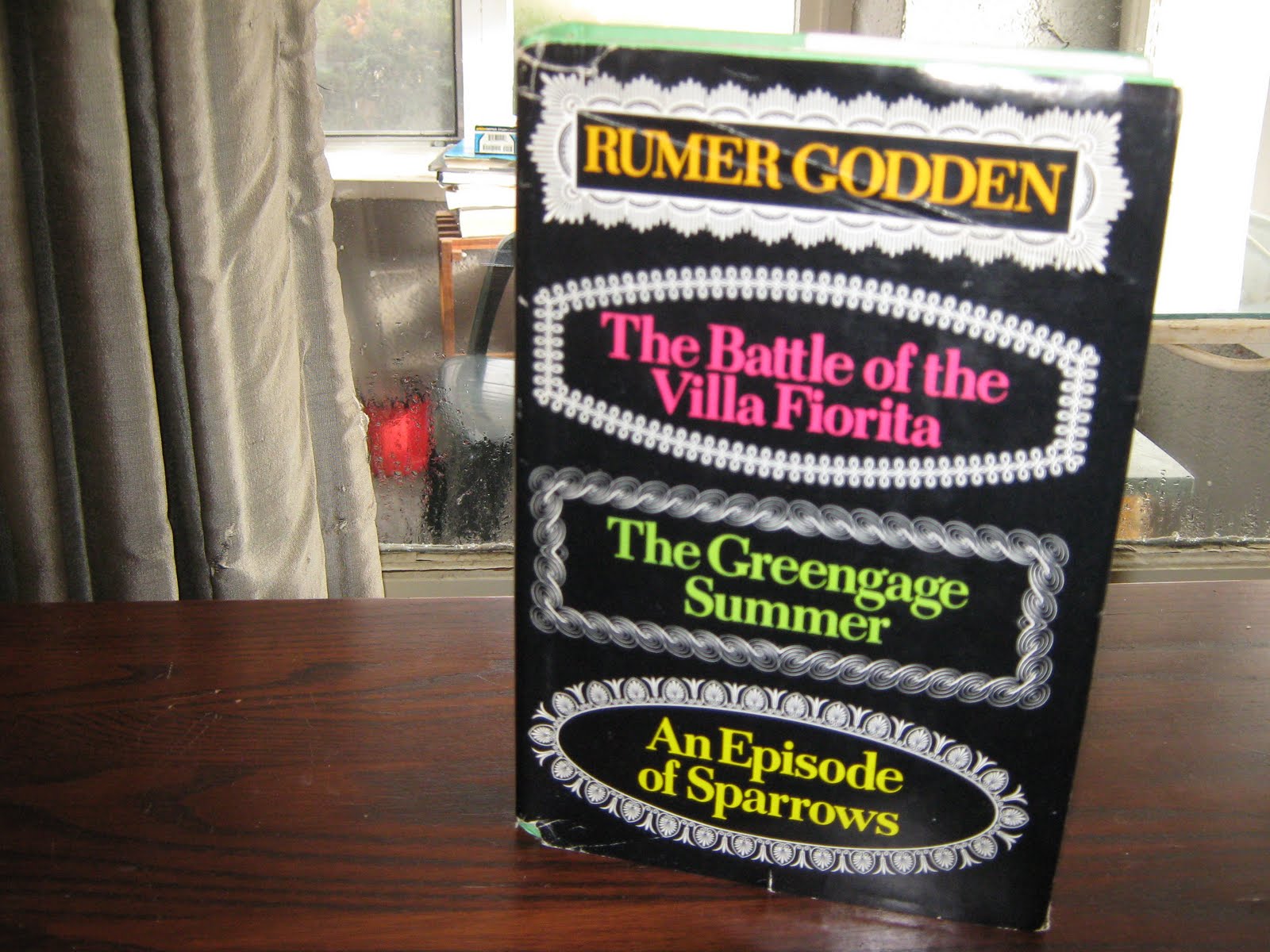
The ‘60s literature puts me in the ‘60s holiday housewife spirit, which is my camouflage for the season. Actually I’m reading a 1963 omnibus of Rumer Godden’s novels, a book club edition bought at the Fabulous Charity Book Sale. Godden is one of my favorite writers - I especially love Kingfishers Catch Fire (reviewed here), her autobiographical masterpiece about a kind of pre-hippie widow who moves with her two children to an obscure village in India and almost gets killed because she doesn’t understand the culture.
Why does this make me feel like a ‘60s housewife?
Well, the pre-feminist ’60s is what my mother experienced. It was "before everything changed - before The Graduate,” as she recalls. She admired the Kennedys, read book club books, went to all the movies, used Green Stamps, made daily trips to the grocery store and the “locker” to get meat (our grandfather was a farmer), stayed home and took care of the children without complaint. The '60s was not for her primarily a period of social change, though she opposed the Vietnam war. Now that has not been my life, but I find it helpful to replicate the quiet atmosphere of Thanksgiving here. Nobody was depressed or suicidal over our holidays!
So there is a lot of reading going on - and there would have been a lot of smoking, too, if this had been that era. There is a little classical music in the background, but earlier we listened to Eric Clapton on “Bellbottom Blues” (1970, but close enough). And I finished The Greengage Summer - and am now blogging, a 21st-century activity, so I'm out of period.
The Greengage Summer is not Godden’s best novel, but it is a revelation: another autobiographical novel (I’ve read her autobiography), about a family of children who end up living alone at a hotel in France one summer while their mother is hospitalized for blood poisoning.
The story is divulged retrospectively through the perceptions of the narrator, Cecil, a 13-year-old girl who is beginning to understand the “grown-up” world as the action happens. Shadows waver and solidify and become human as Cecil analyzes her family’s fascination with Eliot, a kind, handsome Englishman who befriends them. Eliot comes and goes and is having a desultory affair with the owner of the hotel, the rather scatterbrained Zizi, but when Joss, Cecil’s beautiful older sister, recovers from a stomach illness and comes down from her room, Eliot is entranced and begins spending all his time with them.
The children love him, but Eliot’s girlfriend, Zizi, begins to humiliate Joss, upset by what is going on. And though Eliot and Joss don’t have an affair, Joss becomes competitive with Zizi in payback for the humilation. And as other men begin to pay attention to Joss, a tragedy unfolds.
The tone is fairly light - Cecil does not understand everything that happens as it happens - none of them understand what Eliot is up to. But the strange ambiguous ending does show him in a heroic, if rather warped, light.
I really enjoyed this. If you want to read more about Rumer Godden, go here.
Off to play Clue!