Saturday, October 31, 2009

The Wrong Venue


“It wasn't a good idea,” you say.

You were drinking tea in the supine position. After teaching your adult ed class, you lie down in a daze listening to R.E.M. on the headphones. You can’t be bothered to sit up , and since your head is propped on a pillow, you simply lift your tea cup and swig. Cheers. Warm. Your hands are so cold. Could you have some brandy? Just joking. You cannot have brandy. Your doctor gives you pills. Alcohol doesn’t mix with pills. Remember the time you sipped some cooking wine? My God, it was salty. You thought you might pass out.

“What wasn't a good idea?” he asks.

“Teaching adult ed.”

“But I thought you enjoyed it.”

“No.”

“But I hear you in the hall. You sound so relaxed and confident.”

“They don’t respect me. It’s hard to take.”

“They stay after class and talk to you!”

“Yes, but...”

He can’t possibly know. This adult ed class is a real headache. Some are good students, but some don't do the work. Some comprehend one week, but forget everything the next. Then there’s one hostile guy (the first hostile student you've ever encountered, but then you haven't taught in many years) who is always looking for a chance to denigrate you. He likes to interrupt you frequently to deliver mini-lectures on the Roman games (and that is relevant how?). Yes, you have heard it all: the Colosseum, the gladiators, the simulated naval fights on the flooded fields. Smile, smile. Some of the women encourage him. “He’s so smart,” one cooed. He, however, takes off right away after class so none of the women can talk to him. (Gay?)

And then you’re back to grammar, derivatives, and reading simple Latin stories - and the necessary six to seven worksheets you’ve made up painstakingly each week to make sure they get enough practice.

Just when you think they’re progressing - they all were enlightened about the concept of gender, number, and case and excelling on the derivative analysis - all is wiped out of their memories the next week. It’s inexplicable. Can this really be happening? Are they really spending time on it? They’re so sweet. They have their flashcards and they shuffle through them before class. They laugh about learning and relearning their vocabulary. You assure them this is a natural part of the process, but you can see that they reinforce each other in the belief that it’s unnatural to memorize. You emphasize that if they have to “prioritize” (a word you thought you’d never use), learning the vocabulary is the most important thing. But you can never make them close their books during drills because the administrator has made it clear that you must amuse them at all costs and not tax them. And you do mean costs and taxes (ha ha!). After the second week a woman who wanted a full refund after the drop-course “expiration” date complained that your were teaching grammar (and got a refund)! And how else is one to teach Latin? You were truly astonished that you were reprimanded for this. You assured the administrator that you were also teaching English derivatives (many dreary worksheets on identifying verb stems and prefixes) and bringing in culture (many poems translated by me, bits of graffiti, and some Roman culture). But why did you have to assure her of that? What is wrong with grammar? Latin teachers teach grammar. It's essential.

You have never taught a non-credit class. You are not an entertainer. This consumer-oriented approach seems foolish. It's all about making money (not for me - for the program). You're in a state of anxiety - about what? Why not just teach the language the way it should be taught?

Two have said the homework - half to one chapter a week - takes too much time - would you have had the gall to say that to a teacher? - and you try to sympathize but can you really slow down more? You planned to teach 16 chapters. You have compromised insanely. The class meets only once a week for two hours, but they are getting ample practice, as much in two hours as othe students get in their three-times-a-week classes.

Your husband says, "I feel guilty. It was my idea.”

Yes.” It was his idea. Although you both knew it was the wrong venue, there is no other venue.

The university in town has eliminated its language departments.

“It’s kind of a nightmare," you say as you drink your tea by the pound (OK, that's an exaggeration).

“Welcome to my world.”

Some have learned. Some are surprisingly good and could go much faster. (But I only hear from the ones who want to slow down.) Some have been very kind and stayed after class to say how much they have learned - that they got more out of it than they thought. “I thought I would go away with a list of English words,” one said. “It’s much more than that.”

So it is.

Some have told you their stories.

So are you exaggerating the feeling of dissatisfaction? If the majority are pleasant and learning a little - isn't that an accomplishment?

But it's such a small majority.

You should earn more money to make this worthwhile. You're not in it for the money, but you don't want to sweat over something so trivial.

Thursday, October 29, 2009

A Citizen of the Land of Genre Fiction


I’ve been a citizen of the land of genre fiction lately, dipping into two marvelous historical novels, Robert Harris’s absorbing novel about Cicero, Lustrum, which is just as well-crafted as all the reviewers claim, and Rosemary Sutcliff’s lyrical 1963 novel about King Arthur, Sword at Sunset. Sutcliff is probably going to end up at the charity sale; Lustrum, on the other hand, belongs in my cherished Roman kitsch collection. It’s not that Harris’s very well-written and well-researched book is junk, but it belongs on the shelves with everything from Gore Vidal’s classic, Julian, to a truly ridiculous novel called Clodia (which I plan to read in the next dozen years or so).

But much as I admire genre fiction, I prefer historical romances such as Sigrid Undset’s The Master of Hestviken or Anya Seton’s Katherine. Am I saying I prefer women’s fiction? Perhaps. In the beginnings of these novels (novel sequences in Undset’s case), Undset’s and Seton’s heroines’ lives revolve around love, but that shortly changes as work takes them over, they realize love is another difficult relationship, and husbands are far from perfect. These are books that reflect women's experience - love sweeps us away and makes us starry-eyed as young women - but one grows up fast with responsibilities.


Harris’s and Sutcliff’s books, on the other hand, are “men’s” books. Cicero’s and Arthur’s lives both revolve around politics and civil war. Harris's novel is narrated by Tiro, Cicero's secretary, an endearing, nervous character, who is loyal to Cicero, but longing to retire. Sutcliff's novel is told by Arthur, and we feel his dark moods and determination to conquer the invading Saxons, yet Sword at Sunset is primarily an action novel. Both are fascinating, but the emotions just aren’t there for me to glob onto - and I'm in one of those "glob" moods.


Anyway, I’ve moved on to another genre: when all else palls, turn to SF/fantasy. So last night I tried to read John Wyndham’s The Chrysalids - republished by NYRB - and struck out. The Day of the Triffids is a classic, and the second book I blogged about at Frisbee. The Chrysalids, however, is really a children's book - not an all-ages book either. Very disappointing and I'm glad I got it at the library.


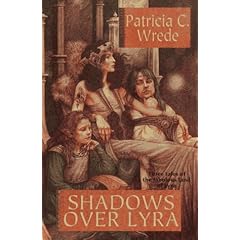
So I walked among my genre books. I’ve considered making this a reading-only-books-on-my-shelves year, but this is unrealistic in terms of my life as a one-woman supporter of the book industry (new and used). But, searching my shelves, I pounced on an omnibus of Patricia C. Wrede’s first three Lyra books, Shadows over Lyra. These novels are delightful, well-written, well-imagined, and the characters are charming and likable. Wrede also has an excellent sense of humor. I began reading The Harp of Imach Thyssel - a novel of the road adventures in Lyra of a minstrel, Emerick, and his rich sidekick, Flindaron, a duke’s son, who, bored by weeks with a trader's caravan, is playing truant disguised as a minstrel. Almost right away they stumble upon danger and dark magic, after a kind of fairy-tale night at an inn, where, strangely, they don't want the minstrels to sing. The novel is suspenseful - the kind of plot you disappear into. It's very good for one of these long, dark nights.

Yes, I'm already complaining about the autumn weather. Daylight savings time ends Sunday. Then you know I'll have all the lights on in my house all the time: it's too dark out there.

Monday, October 26, 2009

The Flirt


Booth Tarkington, a novelist now lost in the annals of regional literature, won the Pulitzer twice in the early 20th century, in 1919 for The Magnificent Ambersons and again in 1922 for Alice Adams. His entertaining novels are too uneven to win a place in the canon, most readers would agree, yet they are engaging, comical, and strangely moving. He shares Sinclair Lewis’s gift for satire, but is more genial. He is as good a storyteller as Edna Ferber but is less smooth. Upton Sinclair, another of his contemporaries, operates on an altogether political plane. Tarkington is a joshing upper-middle-class raconteur, a judge's son, born in Indianapolis, educated at Exeter, Purdue, and Princeton, a sophisticated humorist who documented family life in slow-paced midwestern towns and cities. If you're new to Tarkington, The Magnificent Ambersons is your best bet, but I found myself lately lost in his 1913 novel, The Flirt,a public domain novel which I downloaded onto my Sony. (It has been downloaded 238 times.)

First serialized in The Saturday Evening Post, The Flirt is a fast-paced, colloquial, not particularly well-written novel, but its characters are always alive. Tarkington is especially adept at describing dysfunctional midwestern families. At the heart of The Flirt is the Madison family, all of whom revolve hectically around the demanding middle daughter, Cora, a beautiful, selfish, cruel, charming flirt who keeps her gentle, good-hearted, financially unsuccessful parents in a state of constant apprehension, her lovely, sensitive older sister, Laura, in constant attendance, and her mischievous younger brother, Hedrick, in a constant fury to expose her fickleness and lies.

There is another flirt in the novel: a huckster, Valentine Corliss, who returns to his midwestern hometown, Capitol City, and befriends the Madisons, the tenants of the house he has inherited and intends to sell. Corliss is a charming, intelligent, flirtatious, sexy, likable liar, and he soon begins to practice his con, persuading people to invest in nonexistent Italian oil mines. Cora falls for Corliss and soon puts herself to work furthering his scheme - though she doesn’t understand it’s a scam.

The action revolves around the shallow Cora and Corliss. Everyone in the novel is affected by the cheating of Cora and Corliss: Cora even persuades her sensible former boyfriend, Richard Lindley, to invest in Corliss's scheme, though Laura, who is in love with him, begs her not to; another of Cora's boyfriends, Ray Vilas, a drunken lawyer who doesn't practice law, sees through Cora but will do anything to please her; and Cora's father has a stroke trying to please her.

Cora hurts everyone: her victims are legion. But Corliss is, of course, even worse: there is a line drawn by Tarkington, but it's a very fine line. It's interesting how he takes the concept of flirtation and analyzes its manifestation in men (business relationships) and women (the business of love).

Not the best book I've read this year, but very interesting.

Saturday, October 24, 2009

Touch Not the Cat and Other Light Reading


On Monday, Oct. 19, in the Guardian Books Blog, I enjoyed Alison Flood's laudation of Mary Stewart's Touch Not the Cat, a 1976 Gothic which is out-of-print in England (in-print in the U.S., though). She was responding to 10 famous British writers' recommendations of “forgotten treasures of the literary world,” recently unveiled on Radio 4’s Open Book show. Flood had spent a recent afternoon rereading a second-hand copy of Stewart's novel and declared it lost treasure.

Well, I couldn't have been more thrilled. Kindred spirits? I adore Mary Stewart, my favorite 20th-century Gothic novelist, and am ecstatic to see her mentioned in a world that has gone Daphne du Maurier-mad (the Ph.D.s have rediscovered du Maurier, but are strangely silent on the subject of Stewart--surely a mistake). Touch Not the Cat is a book I haven’t reread, possibly because I’m uneasy about the narrator’s telepathy (a very weird element, not characteristic of Stewart’s fiction). But I started reading it last night and simply fell into it. The years fall away - suddenly I’m Bryony’s age - and I’m absolutely terrified that she’ll make a poor decision about love based on the fact that she doesn’t know who her telepathic friend is. (One of her cousins? Which one?) Her father has just died, she’s returned from a job in Madeira to live in the cottage on their estate (there’s an entail and the cottage is all she'll have), and her father, the victim of a hit-and-run accident, had ranted about danger in last words recorded in shorthand by a police secretary.

About the neglected books: Susan Hill's enthusiasm for F. M. Mayor’s The Rector’s Daughter, which I read and loved last year, has sent it to an Amazon best-sellers list. This seems to be the kind of thing that happens in the English book world all the time, but it's hard for me to imagine American radio having the same effect. Could NPR (surely our Radio 4 equivalent) send an old novel to the bestseller list? Would everybody suddenly start reading Susan Glaspell's Fidelity or Edna Ferber's So Big? (No. Not even Oprah could inspire Americans to read "old" books. Americans like the contemporary.)


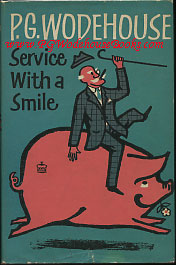
Since finishing my post-modern contemporaries, or post-contemporary moderns, I’m in a light reading phase. I just finished P. G. Wodehouse’s Service with a Smile, which I’ve been dragging around in my bicycle pannier for a couple of months. It’s one of those later, rather absent-minded books in which Wodehouse starts to repeat himself: yet again there is a plot to steal Lord Emsworth’s pig, The Empress of Blandings. And I can’t believe that Lady Constance is really gettting married and written out of the books, but perhaps P. G. was sick of her.

Wednesday, October 21, 2009

Sword at Sunset & The Last Days of Pompeii


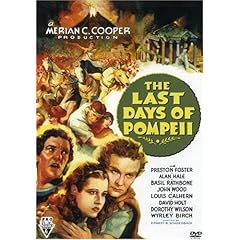
I’ve been so modern lately that I have had to ease into historical novels out of a need to escape. My immersion in the hip WEIRD worlds of Jonathan Lethem’s poetic marijuana-inspired alternate Manhattan (Chronic City, best novel of the year) and Lydia Millet’s offbeat stories about celebrities identified by relationships with animals, Love in Infant Monkeys, has been exhausting. I prefer HISTORICAL historical novels when I take the leap into the literature of escape: older books like Rosemary Sutcliff’s Sword at Sunset (1963) or Bulwer-Lytton’s appallingly badly-written The Last Days of Pompeii (1834), which appeals to me for its kitschy drama and careful attention to details from William Gell’s Pompeiana (Bulwer-Lytton dedicates the novel to him).

And so I’m reading both of them, Sword at Sunset in an attractive edition reprinted by the Chicago Review Press and The Last Days of Pompeii in a free manybooks.net edition on my Sony Reader.

Sword of Sunset is a thoughtful, beautifully written classic novel about King Arthur, based less on the legend than on a historical reconstruction of 5th century Britain and Arthur's struggle against the Saxons. The novel begins with the narrator, Artos the Bear (Arthur), wounded and examining his life, musing on his years of leading the Britons against Saxon invaders to defend Celtic-Roman civilization, and reviewing his mistakes, great love, and friendship-enmeties. I remember reading this book shortly after obtaining my first adult library card: I wandered dazely around the library looking for nothing in particular, pulling out books and deciding rather haphazardly what to bring home. My memory of the golden autumn light in which I read this - propped on my elbows in front of the screen door - was sparked by the opening paragraph of Sutcliff's poetic prose:

“Now that the moon is near to full, the branch of an apple tree casts its nighttime shadow in through the high window across the wall near my bed. This place is full of apple trees, and half of them are no more than crabs in the daylight; but the shadows on the wall beside my bed. This place is full of apple trees, and half of them are no more than crabs in the daylight; but the shadow on my wall, that blurs and shivers when the night wind passes and then grows clear again, is the shadow of that Branch the harpers sing of, the chiming of whose nine silver apples can make clear the way into the Land of the Living.”


This is fascinating, if rather slow. I love the character Artos. I'm not a great reader of war books, but I'm completely absorbed in Sutcliff's breathtaking, suspenseful, realistic scenes. Sutcliff is best known for children's books, but this is an adult novel. She has a grand stately vision of Arthur's England.


The Last Days of Pompeii is so overwritten that it puts me to sleep - therefore I am proceeding at the pace of three pages a night. Will I finish it? Well, I’m not sure. But I do want to get to the destruction of Pompeii. I may have to skip ahead. That does seem the best way to get through this.

Saturday, October 17, 2009

Chronic City


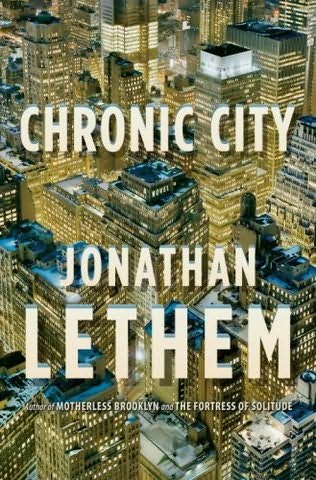
I’ve been waiting for Jonathan Lethem's Chronic City since I read an excerpt in The New Yorker last spring. It's finally out. I swooped on it at B&N. Lethem is probably the best American writer working today; his idiosyncratic characters, original plots, and witty, lyrical style never fail to amaze me. He's in control of his writing, which soars, dips, loops, and somehow remains smooth. At 45 he has already written two masterpieces, The Fortress of Solitude and Motherless Brooklyn (which won the National Book Critics Circle Award), and some people never forgive him for that. Though most critics love Chronic City, some are surprised that each book is wildly different from the last. Lethem doesn’t write the same book twice, and Chronic City has little except rock music in common with his last two novels, You Don't Love Me Yet, a short novel about a rock band, and The Fortress of Solitude, a bildungsroman about Brooklyn, growing up, race, music, and gentrification.

In a weird kind of way, the narrative voice of Chronic City reminds me of that in The Great Gatsby, which in turn is related to Petronius’ Satyricon (Trimalchio’s dinner party). The plot isn't really similar - at least as far as I’ve read - and perhaps I'm making a Perkus Tooth connection (Perkus, one of the main characters in Chronic, sometimes makes haphazard connections).

The novel is narrated by Chase Insteadman, a wealthy former child star whose casual voice is soothing and tolerant (we meet him when he’s doing a voiceover at a DVD studio). He doesn’t work much, he’s a charming ornament at people’s dinner tables, his astronaut girlfriend is literally lost in space (their romance is famous), and he lives off residuals from his ‘80s sitcom. He spends most of his time with some remarkable characters, who live in a kind of alternative parallel city and quickly overshadow his own star. Perkus Tooth, a former pop culture critic for Rolling Stone, takes a shine to Chase when they meet at the Criterion Collection. It seems a strange friendship: Perkus seldom leaves his apartment and spends most of his time smoking dope (a kind called Chronic is his favorite), watching old films, listening to little-known CDs, and making paranoid connections between disparate aspects of the culture. Chase, a rather quiet socialite, is fascinated by him.

Perkus is such a '60s throwback that Chase's hilarious observations about his discovery of eBay as the result of an acupuncture session are typically over the top (Perkus has an epiphany about beauty as he gazes at a vase in a photo on the acupuncturist's wall and decides to buy one for himself):

“If anything epitomized Perkus’s curious disadvantages, his failure to find traction in the effective world, it was the state of his computing. Perkus was the type to be Web-delving on some sleekly effective Mac, I’d have thought. Instead his lumpy Dell looked ten years old, Cro-Magnon in computer years. He connected by his phone line, which he transferred by hand from his living-room Slimline, and which bumped him offline if anyone rang, but also, it seemed, intermittently and at random. Watching that Dell painstakingly assemble a page view, images smoothed pixel by pixel, was agony. Perkus was enchanted - he’d just discovered eBay, by way of the chaldron hunt.”


One of the year’s best. I'm saving some of it for tomorrow.

MORE ON TEACHING: It was much better. Everybody did the homework. Now I don’t have to theorize gloomily that the society has gone to hell and no one wants to learn anymore, minds boiled by TV. But I slowed down anyway and did an intensive nominative-accusative review and mildly suggested that learning the vocabulary was the most important thing. They agreed.

READING ON THE SONY: I love Booth Tarkington’s The Magnificent Ambersons and Alice Adams and decided at random to download The Flirt. So far it’s surprisingly good.

Wednesday, October 14, 2009

National Book Awards


Gore Vidal will receive the Medal for Distinguished Contribution to American Letters from the National Book Foundation.

The National Book Awards are more enthralling than the Oscars, the Pulitzer, the Emmys, or the Golden Globes if you're facing bleak weather and want to stay indoors and read. People don’t go stir-crazy for the NBA (the book awards, not the basketball): this isn’t the Booker and it isn't England. No one bets on the National Book Award, no one writes a million articles for the lifestyle sections on the award, and nobody is really on tenterhooks about who will win. The NBA needs the Man Booker Prize’s publicists: the publishers would love it. So many deserving books are brought to our attention through the NBA every year - and the great thing is that the National Book Awards go to fiction, non-fiction, poetry, and young adults’ lit.

Gore Vidal has been declared winner of the Medal for Distinguished Contribution to American Letters and Dave Eggers winner of The Literarian Award for Outstanding Service to the American Literary Community. The rest are still in the finalists stage.


This time, amazingly, I’ve read two of the finalists for fiction, Jayne Anne Phillips’ Lark & Termite and Colum McCann’s Let the Great World Spin. Since I don’t have a good record for reading contemporary fiction, I’m quite pleased that I know two of these books. Phillips’s Lark & Termite is my favorite, but give the award to Colum McCann and you still have my vote. I’ll write briefly about the two I've read and then list the others in all categories below.

Phillips’s Lark & Termite: Set in West Virginia in the ‘50s, this novel poetically delineates the unusual symbiotic relationship between Lark, a teenager, and her younger brother, Termite, a handicapped child whom she cares for and whom the social services want to send to a special school. Interwoven are the stories of Aunt Nonie, the waitress who raises them, their absent mother, and Termite’s father, lost in the Korean War.


Colum McCann’s Let the Great World Spin: a novel that interweaves the stories of several diverse Americans, including prostitutes, a monk, computer hackers, and a group of grieving mothers of Vietnam casualties. While Philippe Petit walks a tightrope between the Twin Towers in 1974, these New Yorkers experience the poignancy of everyday dramas.

The other fiction finalists are:

Daniyal Mueenuddin's In Other Rooms, Other Wonders

Marcel Theroux's Far North

Bonnie Jo Campbell's American Salvage

Nonfiction finalists:

David M. Carroll’s Following the Water: A Hydromancer’s Notebook

Sean B. Carroll's Remarkable Creatures: Epic Adventures in the Search for the Origins of the Species

Greg Grandin's Fordlandia: The Rise and Fall of Henry Ford’s Forgotten Jungle City

Adrienne Mayor's The Poison King: The Life and Legend of Mithradates, Rome’s Deadliest Enemy

T. J. Stiles' The First Tycoon: The Epic Life of Cornelius Vanderbilt

Poetry finalists

Rae Armantrout's Versed

Ann Lauterbach's Or to Begin Again

Carl Phillips's Speak Low

Lyrae Van Clief-Stefanon's Open Interval

Keith Waldrop's Trancendental Studies: A Trilogy

Young people’s literature finalists:

Deborah Heiligman's Charles and Emma: The Darwins’ Leap of Faith

Phillip Hoose's Claudette Colvin: Twice Toward Justice

David Small's Stitches

Laini Taylor's Lips Touch: Three Times

Rita Williams-Garcia's Jumped

The winners will be announced Nov. 18.

Monday, October 12, 2009

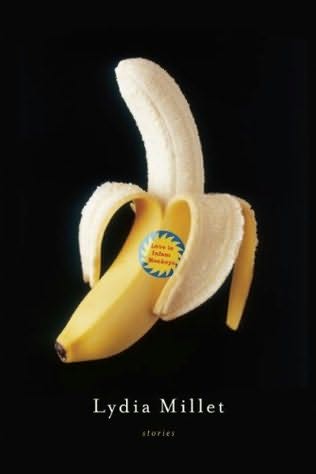
Love in Infant Monkeys


Lyida Millet is one of those astonishingly talented writers whose work should be better known. Her 2005 novel, Oh Pure and Radiant Heart, is one of my favorite books of the 21st century. It should have won an award; why didn't it win an award? I don't read much contemporary fiction. Some of it is good - but often not good enough. If I'm going to read substandard fiction, I'd rather read books of a different time period (they're usually better-written). But Millet's work is SUPER-standard (OVER the top): she's original, witty, and more politically astute than any American writer today.


Her novel, Oh Pure and Radiant Heart, is a lyrical, darkly comic, political fantasy in which nuclear scientists attempt to make reparation for the atom bomb. Ann, a gentle librarian, awakes from a disturbing dream of Robert Oppenheimer kneeling in the New Mexico desert and witnessing the mushroom cloud. And then Oppenheimer comes back to life, with the two other scientists credited with the invention of the atom bomb, Leo Szilard and Enrico Fermi - as a result of the dream, or of witnessing the horror of the bomb. They learn the consequences of history and make a pilgrimage to demand nuclear disarmament. A cult forms to follow these penitent men in a fleet of RVs.

Loved the book! So I was expecting great things of Love in Infant Monkeys, her new collection of short stories.

These are Millet at her darkest and wackiest, in minimalist mode - and still political - a collection of edgy short stories linked by the presence of celebrities and animals. The style is much more truncated than that of her novels, and the reader’s attention is mostly on the black humor and irony. The characters in the stories include Madonna, Jimmy Carter, Thomas Edison, and David Hasselhoff’s dogwalker. Animal rights and animal abuse are a common theme and subtext - very hard to read.

In “Sexing the Pheasant,” Madonna shoots a bird and then meditates on what it means to be a pop star, egotistically congratulating herself on her superiority as she waits for Guy to stop his “frat boy” drinking and come and kill the pheasant. “She should step on its little head and crunch it. But her boots were Prada.”

Her narcissism is extreme.

“She was chosen by God. That was what so many people seemed to completely overlook. What else explained her meteoric rise to stardom?...For twenty years now she had basically been a megastar. Try the most famous person in the world, basically. They said her name in the same breath with Elvis and Marilyn.”

Ironic. Look what happened to them.

Actually, I like Madonna.

In “Love in Infant Monkeys,” the title story, the egotistical, cold scientist, Harry Harlow, tortures monkeys to prove that children need love. This is so ghastly to read I almost couldn’t finish it. He deprived them of their mothers and isolated them in boxes.

“Put it in a bare box, observe it. Anxiety first, shown in trembling and shaking; then come the screams...Make careful notations.”

He sees how the monkeys react to wire mannequins, mannequins in terry cloth, total isolation. He has no emotions. He has two families of children he never sees. His current wife is dying of cancer. He is a functioning alcoholic and he despises mothers: particularly a maternal woman at a party who is concerned about his sick wife. And then he has nightmares of facing the mother monkeys.

In "JImmy Carter's Rabbit," Jimmy Carter faces a giant rabbit while fishing. It lunges at him through the water. His boyhood friend, who tortured animals, has a problem with this absurdity. And so did the press, who published a ridiculous photo of him. But Carter is drinking with his boyhood friend for a different reason. And through the friend's eyes, we see a Carter that the friend doesn't see.

In " Thomas Edison and Vasil Golakov," Edison becomes obsessed with a film of electrocuting an elephant.

These stories are not for everybody - they’re very serious and ironic, the humor is hard, the cruelty is emphasized. I might as well admit I’m not a fan of short stories. Oddly, I found it harder to read about these animals than I did about the Atom Bomb. These are so pared-down that the lyricism is gone. They are solid short stories - but I much prefer her novels. How the Dead Dream is also very good. Her books are published by Soft Skull Press.

Saturday, October 10, 2009

Sister Sue


Eleanor Hodgman Porter (1868-1920) was a pop turn-of-the-century girls’ writer whose briskly-plotted novels explored the conflict between duty and self-expression in girls’ and women’s lives. Her novels are comparable to those of L. M. Montgomery and Gene Stratton Porter, and her plots race along, though her uneven style ranges from serviceable and lively to wooden and didactic. Yet there is a sparkle to Eleanor Porter’s stories, even when the characters lapse into the kind of pre-feminist wearying duty and drudgery that can ruin lives. Porter’s moralistic themes seem pertinent today: how many women in this depressed economy must, like the heroine of Sister Sue, postpone pursuing their dreams to make a bare living or care for more than one generation of their families? Though Porter is best-known for her children’s book Pollyanna, her novel Sister Sue seems to be an adult novel: the heroine, Sue Gilmore, is an aspiring concert pianist who has everything - talent, a devoted fiance, and affectionate, if dependent, younger siblings, whom she has looked after since their mother's death - until their rich father loses all his money and has a nervous breakdown.

Sue tells her fiance,

“We’re to give up everything, of course. That’s what folks always do when they fail, isn’t it?” She gave a weary little smile. “Mr. Loring has been out here every day. He knows everything about Father’s affairs, you know - more than Father does himself, I guess. Anyway, he knows enough. We’ll have to give up the house and cars and everything here, of course.”


Incredibly, Sue’s fiance, Martin Kent, a selfish writer who is very interested in Sue’s money, postpones their marriage - he can't bother Sue at such a time - and refuses to move with them to Gilmoreville, Vermont, because it is not "good copy" and Sue's father now depresses him. And her sister, May, and brother, Gordon, are incredibly selfish: they allow Sue to wait on them hand and foot, care for their father without help, and complain about the loss of private schools and high society, blaming her for everything.

Sue’s life improves: she finds she can make a bare-bones living as a music teacher and hire someone competent to do the hated housekeeping. But it is a step down for Sue, who did not intend to teach scales to children. She makes sacrifice after sacrifice to support her idle brother and sister.

But when she helps organize a “home week” for the town, she invites back celebrities: two musicians, a novelist, and a ball player who grew up in Gilmoreville. Her talent brings her into contact with a famous violinist whose accompanist must unexpectedly leave before the concert.

She lives through horrible betrayals. Her family, as is so often the case, is the group that least appreciates her. Porter does question conventional wisdom. She lets us know the "Sister Sues" of this world are not appreciated. The novel does not quite end the way you think it will, though Porter does satisfy her readers with a romance. She reminds me a bit of Mrs. Oliphant.

Born in New Hampshire, Porter studied music at the New England Conservatory of Music and was a choir and concert singer. She gave up music to become a full-time writer in 1901. Her husband was a businessman. She died in Cambridge, Massachusetts, in 1920.

Miss Billy, which I really enjoyed, is more fun, though Sister Sue is the better, more realistic book.

Thursday, October 08, 2009

Dead Languages Can Be Fun


It seemed like a good idea at the time. Teaching an evening course. Persuading an administrator that dead languages could be fun.

Then they signed up.

So you’re in Roman matron mode once a week: 3/4 vanilla L. L. Bean, one-fourth New Balance. Your hands wave energetically as you write on the board and optimistically conjugate verbs. The pens seldom work. It’s surreal. One cap off, then the next, then the next. You start lining the dead pens up on the desk. And if you can’t write on the board, everything is lost, because a dead language is all in the spelling.

Adult education is different from real school. The community education crowd is diverse. They’re not motivated by grades. There are no grades. Some want to learn language, others admit they just want to “dabble,” and several really enjoy the wild derivative improv. Okay, half haven’t done their homework. Everybody is there for a different reason. And you have to make them want to study or entertain them (not your forte), because they’re there on a voluntary basis - and it’s only once a week.

“That’s fine. Just say ‘Pass’ if you don’t want to answer,“ you say glibly.

It’s like - since you’ve moved back to the Midwest - nobody does any work. Is this possible? You tutored this subject once, and the father seemed to think all could be done in a one-hour session, with the kid doing no work between tutorials.

These are adults, thank God. But what do you do when they swing in and announce they haven’t cracked a book since last week? You GUESS it’s all right.

For a good time, try to explain to a stunned student that, yes, ora can mean “pray!” (imperative singular of oro), “border or boundary” (nominative singular of ora), and “mouths” (nominative or accusative plural of os). Now you understand you don’t WANT to explain this. It came up - in passing.

Have you ever noticed that the less prepared the students are, the more they want to kill time?

Now some of these students are very diligent. You thought you had slowed down enough for everyone, but the concepts of subject-verb-direct object-indirect object-adverbial are completely new to two or three - so you've had to mix everything up. You’ll go in next week and cunningly review two cases - yet also correct homework using all five cases - and imperceptibly move on and introduce a new declension for the others. One- room-schoolhouse, here we come - WILL everyone be caught up next week? - but Laura Ingalls Wilder and Bess Streeter Aldrich, did you have this situation?

They seem to have a nice time and you honestly like them, but it’s clear that your own subject isn’t enough for all of them.

You wish you didn’t find etymology so boring.

They’re just such a nice group.

What do you think? Crossword puzzles maybe? You are now for the first time understanding what a very laid-back teacher friend once said years ago - “We don’t actually care if they learn, do we?”

Well, you sort of do!

Monday, October 05, 2009

The Romans & Miss Billy


I’ve been reading up on ancient Rome lately, orchestrating Fagles’ translation of The Aeneid with essays in The Oxford Book of Roman History (including some literary criticism on Virgil). It’s very satisfying, since it’s some time since I’ve read any Roman history. But a little ironic voice keeps saying: So what should I do with this? Should I memorize the kings again? Was the test matching or fill in the blanks? I have a vague picture in my mind of me, bored, taking a test: Numa Pompilius, Tullus Hostilius, Ancus Marcius, Tarquinius Priscus (Tarquin the Elder), Servius Tullius, and Tarquinius Superbus (Tarquin the Proud). Don’t you just know that with a name like Tarquinius the Proud the monarchy HAD to come to a bad end? But couldn’t I just look them up? And what are the dates? 753 B.C. to - wait, I’m checking - 510 A.D. On to the Republic...then to the Empire.

And I’ve started another delightful basic book excellent for brushing up on Roman history: Antony Kamm's The Romans: An Introduction. In 224 pages it succinctly covers the founding of Rome to the end of the empire, interweaving important people and events with the moralism, religious rituals, customs, art, and bawdy humor of everyday life. Kamm is a lively writer: he sometimes makes me laugh. He’s got a gift for breaking up his history with witty passages from writers:

"(Cato the Elder) expelled Manlius, a prospective candidate for the consulship, from the senate for embracing his wife during the day in front of their daughter. For himself, he said that he never embraced his own wife except when it thundered loudly, adding jocularly that he was delighted when it did thunder."

--Plutarch, Lives: Cato, XVII


Naturally, I’m also reading fiction. Could I ever stop? I’m reading Eleanor H, Porter’s Miss Billy, which I found at Gutenberg. So amusing! Porter is the author of Pollyanna, which I saw as a Disney film with Hayley Mills and Agnes Moorehead, and have a vague memory of reading as a child. But I never found anything else by Porter. Miss Billy is the first of a trilogy: Miss Billy, Miss Billy Married, and Miss Billy Makes a Decision. Billy is an 18-year-old orphan-heiress, who, upon the death of her aunt, contacts her father's best friend, William, because she is his namesake. Thinking she is a boy, William invites her to come live with him and his two brothers in Boston at "the Strata," thus called because each of the three brothers has his own “stratum” or floor on which to pursue his interests. William collects antiques, Cyril is a musician, and Bertram paints.


When William meets Billy at the train station and finds she is a young lady with a kitten named Spunk, he is frazzled. But of course Billy wins the brothers' hearts. And she turns out to be a kind of genius at the piano.

It's very, very funny and charming. When Billy sees her room, she breaks down into hysterical laughter - they of course think she’s crying - because she realizes they thought she was a boy.

“In a moment Billy was on her feet, fluttering about the room, touching this thing, looking at that. Nothing escaped her.

“‘I’m to fish - and shoot - and fence!” she crowed. ‘And, oh! - look at those knives! U-ugh!...And, my, what are these?’ she cried, pouncing on the Indian clubs. ‘And look at the spiders! Dear, dear, I AM glad they’re dead, anyhow,” she shuddered with a nervous laugh that was almost a sob.”

But then there’s a conflict. The brothers’ evil sister, Kate, dislikes Billy (especially when she tells her that she finds her daughter, Kate, ALMOST as interesting as Spunk the kitten) and lets her know that she in the way at her brothers’ house. This is not true, but Billy goes home to her small town with “Aunt Hannah,” her Boston chaperone, then to Europe, and doesn't see them for three years.

I’m not finished, but everyone is in love with Billy - and she doesn’t want to marry. I think I know where the romance is going, but I could be wrong.

Saturday, October 03, 2009

City & The Oxford History of the Roman World


Can any two books be more different than City (a science fiction novel) and The Oxford History of the Roman World (history)? I doubt it. One is a dubiously valuable novel about man’s post-urban future and demise (as related by talking dogs) and the other a collection of essays for those who have forgotten Roman history, or at least want to read about it again. The well-researched essays in the latter book are excellent, including “Early Rome and Italy,“ "The First Roman Literature,” “Augustan Poetry and Society,” “Silver Latin,” “Roman Art & Architecture,” etc. It can be read as a good, short history, used as a reference book, or dipped into according to interests. I’m so glad I found it - browsing at B&N.

Clifford D. Simak’s novel, City, however, is a puzzling mix of apparent prescience, pure fantasy, and a series of conventional SF plot hooks. In 1953 Simak won the International Science Fiction Award for City. Simak (1904-1988) was a journalist whose avocation was science fiction: he won the Hugo, the Nebula, and other awards for various of his 26 novels and seven short story collections. Because I adored They Walked Like Men (1962), an ironic, little-known classic in which Simak imagines real estate as more valuable than any other human property to aliens who seek to take over the world, I expected great things of City. Aside from Simak's obsession with the demise of urban real estate and the spread of urban sprawl, the novel is disappointing, more like a children’s book than an SF classic. (And, indeed, I think I must have read it as a child, because some parts I remember vividly - such as the talking dogs’ giving a new body to a personable, ancient robot, who has been passed down to them from the last family of humans.)

The novel is really a collection of Simak's short stories from 1944-1951 - eight legends of mankind linked by the anthropological Notes of a race of genetically altered talking dogs. Did man ever exist? The talking dogs who inhabit the planet - man long ago fled to Jupiter - doubt it.

“Most authorities in economics and sociology regard such an organization as a city an impossible structure, not only from the economic standpoint, but from the sociological and psychological as well. No creature of the highly nervous structure necessary to develop a culture, they point out, would be able to survive such restricted limits. The result, if it were tried, these authorities say, would lead to mass neuroticism which in a short period of time would destroy the very culture which had built the city.”


The first short story, “City,” is the most memorable, and is worth looking for if one is interested in urban sprawl. Very few people in the late 20th century remain in cities - atomic airplanes and helicopters have replaced cars and made it possible for a dwindling population to live on big country estates and commute hundreds of miles to work. Only renegades still live in cities: old-fashioned residents reluctant to give up the traditional ways and farmers displaced by hydroponic farming who have developed their own urban culture (ironically). A crisis occurs when an insanely controlling police force decides to burn down the farmers’ houses. Webster (the first of many Websters in the novel) supports the rebel farmers and gives a speech on how the city is a dying structure, and “the automobile started the trend and the family plane finished it.”

How did Simak know all this? Was he already noticing and writing about urban sprawl for the newspapers after WWII? I’m sure that’s it. During WWII people were encouraged to bicycle rather than drive (save gas) by the government (I read this in a rather radical bicycling book). Then the trend was reversed at the end of the war. All that road-building. One can only surmise that Simak the journalist knew this.

Talking dogs are genetically engineered by one of the later generations of Websters, who hopes that dogs can live without making man’s mistakes.

It’s a strange, strange book - some of it a bit like Ray Bradbury.

I can’t really recommend it, but there are interesting passages. Still, the lively voice of They Walked Like Men is lacking. A clever idea, though. The dog’s appalled look at the unlikeliness of human culture.

Wednesday, September 30, 2009

Virgil, Robert Fagles, and Margaret Drabble


I didn’t know Robert Fagles had translated The Aeneid. Nobody told me. I haven't kept up. I was browsing in a bookstore and discovered his 2006 translation in a beautiful Penguin Deluxe edition. I bought it immediately. The cashier treated me with respect. How many customers buy The Aeneid? This was the only Fagles in the store, though I have to admit they carried other good translations, among them Allen Mandelbaum's, Robert Fitzgerald's, and Dryden's.

Still, there’s something special about Fagles. Some years ago a group of intelligent online friends discussed Fagles’ The Odyssey, and we agreed it was a startling experience, the poetry seeming crisper, clearer, and more vivid than Richard Lattimore’s more literal translation, which we read in college. He also translated The Iliad. There are other equally good translations: Robert Fitzgerald's The Iliad, The Odyssey, and The Aeneid are stunning.

Epic poetry is my favorite. The more I read The Aeneid, the more I appreciate it.

“Wars and a man I sing,” Fagles begins.

Virgil writes: "Arma virumque cano," literally “Arms and the man I sing.” The most common translation is, "I sing of arms and the man.” Fagles uses the word "war," not "arms" - less striking than Virgil's metonymy- but there is something fierce and simple about “wars.’

War is Aeneas' fate, a fate he doesn’t want. Early in Book I, during a turbulent storm caused by Juno, with people dying all around him, we first meet Aeneas. He cries out:

“Three, four times blest, my comrades
lucky to die beneath the soaring walls of Troy-
before their parents! eyes! If only I’d gone down
under your right hand - Diomedes, strongest Greek afield-
and poured out my life on the battlegrounds of Troy!’

Many don't like Aeneas. He seems colorless, listless, too obedient to the gods. He is a hero in the Roman tradition: dutiful, pious. Aeneas wishes he were dead. He is denied a personal life. He must carry on. It is his fate to lead the Trojan refugees to Italy and found Rome. And a miserable life it is, traveling through hostile lands and seas and then conquering Italy so that further generations of Trojans/Romans may thrive. A man tired, dispirited, forced to lead by default.

The great anti-war literary poem. Some read it as a celebration of empire, most as a subtle condemnation of war and the loss of personal life.

Robert Fagles died last year. I wasn’t aware of that. Somehow I had been expecting more translations. I had thought of him as young and dashing. Strange, isn't it?


As a companion volume to The Aeneid, I am reading Margaret Drabble's The Seven Sisters. In this novel, she writes in part about an adult community center Latin class in London, in which the aging students compare many different translations of The Aeneid to the Latin. The heroine, Candida, a rather muted, practical, judgmental, but smouldering-under-the-surface adventurous aging divorcee, organizes a trip to Italy with the class after the adult education center closes and becomes a health club. The health club is modern, but discussing The Aeneid gave purpose to Candida. Book 6 of The Aeneid is the key for Candida.

Anyway, it’s a charming novel.

Monday, September 28, 2009

Rebels with the Proofs and the Diva Maureen Howard


If you’re an impatient person, Advance Uncorrected Proofs are perfect, because they're very readable, even though they’re rather poor-quality trade paperbacks, with big tacky NOT FOR SALE signs and marketing information printed on the covers. I’ve collected Advance Uncorrected Proofs for a long time. It started when I was a book reviewer and the book editors sometimes forgot to replace my Advance Uncorrected Proofs with the published books. I was relaxed about it. They had a lot to do and I didn’t want to bother them. You had to be nice. You had to work.

Then I went through a phase where I ordered everything in advance on the internet because Uncorrected Proofs were for sale (and I didn’t have to review them, either). Thus I got the advance proof of Will Self’s apocalyptical novel, The Book of Dave, and Margaret Drabble’s The Sea Lady.

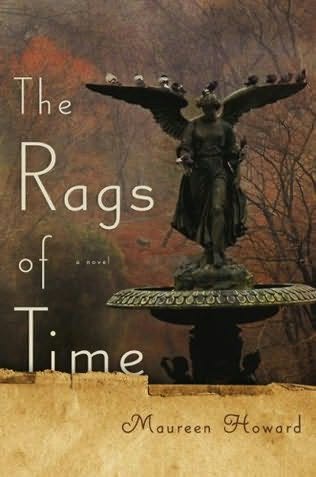
But this year - they’re just not for sale. The rebels with the proofs are discreet. I recently did manage to find the uncorrected proofs of The Rags of Time by the award-winning Maureen Howard (an American diva), one of my favorite writers. It’s the final volume of her “Four Seasons” quartet: the others are A Lover’s Almanac, Big as Life, and The Silver Screen. If you’re not familiar with her work, you should read her: she’s a female Joyce/Updike - is that an exaggeration? She won the National Book critics Circle Award for her 1978 memoir, Facts of Life, and has been nominated repeatedly for the PEN/Faulkner fiction award.

The Rags of Time (Autumn) splendidly interweaves the story of an aging writer with her fictional characters, people we met in Howard's previous books in the quartet. It’s a bit hard to keep up if you don’t remember them, so I would suggest reading the other books first: I had to skim parts of the previous three before I felt confident. Her style is much, much more elliptical than Anthony Powell’s in A Dance to the Music of Time, so it is a bit of work. She’s very lyrical - usually accessible, sometimes less so - and much more ambitious than most contemporary writers. Howard has a very visual imagination and her books are also illustrated with photos and drawings.

In Howard's new novel, reality and fiction are filtered through the consciousness of the novelist, an invalid who wears a floppy black coat and jeans shredded at the cuffs in the autumn as she shuffles on her walk around Central Park, and begins by recalling the “performative" ‘60s, her anti-war protests against Viet Nam and Cambodia - and correlates the time with the current war - but she is now unable to march. As she walks and later at home, she imagines the present of her fictional characters from past books (the other books of the quartet).

Among the writer's characters are Arnie, a young mathematician, struggling to solve problems and musing about his family life while waiting to testify in court on behalf of a boyhood friend who has broken financial laws. Louise, Arnie's wife, an artist, now devotes most of her anxious days to caring for her children. She copies the names of casualites of the Iraq war into an old baby book, saying it's art, a personal way of remembering, completely different from printing out their names from the internet.

There is also Sylvie, a refugee from Innsbruck in WWII, who was raped by Nazis and traumatized before she and her mother, Inga, moved to NY. Inga, a realist who quickly recovered, immediately found boyfriends, flirted with Hollywood, and soon married a rich man in Texas. Sylvie worked as a translator for the UN; eventually she recovered from her fear of men and married a well-to-do man with children; and then had an affair with Cyril, the grandfather of Arnie.

One is not supposed to quote from uncorrected proofs - says so right on the cover! - but why not break the rules? This is the internet!


Here is an excerpt about Sylvie. This passage is illustrated with a woodcut by Durer.

“Still the Federal house is not her home; and the broad stucco villa on Lundstrasse is not home, though she can tour every room with portraits of of ancestors, all men with trim whiskers, several with military honors of the Austro-Hungarian Empire. The Durer woodcuts were hung between mirrors in the dining room. So predictable, Inga said to her friends in New York, and so dreary.... Well, Inga would rather not partake of Melancholia with her schnitzel, Danke schon, and one day said as much to her husband.... The famous etching of that brooding angel with her mystical apparatus and a sleeping dog at her feet remained in its place.”


Howard writes beautifully - I'm savoring this novel.

PROOFS I SEARCHED FOR EARLIER THIS YEAR AND FAILED TO FIND :
Margaret Drabble’s The Pattern in the Carpet, her elegant memoir/history of jigsaw puzzles. I ended up buying the hardcover from the UK last spring. It’s a beautiful book and no regrets. But I looked for it every time I went online for months. I was VERY disappointed I couldn't get it in advance.

Saturday, September 26, 2009

Counting the Stars


Helen Dunmore’s Counting the Stars has been on my shelf for a while. This well-written, sensuous novel, published in 2008, is based on the lyric poetry of Catullus and centers on his affair with a woman he called "Lesbia" (the name is a tribute to Sappho's poems, nothing to do with lesbianism). Traditionally she is believed to be Clodia, the wife of the consul of Rome in 60 B.C. Clodia had a bad reputation: she was accused by Cicero in his speech Pro Caelio of seducing the young man Caelius and somehow plotting to involve him - or make it look as though he was involved - in a political murder. The fact that she was older made her guilty. It all sounded very sexist and improbable to me: Caelius was indulged in sowing his wild oats but she, as a woman having an affair with a younger man, was portrayed as a sexual deviant. She was also accused of having an incestuous affair with her brother, Clodius Pulcher.

Catullus is one of my favorite poets: I was very fond of him when I was young. He made Latin come alive in a way that still feels immediate and contemporary. As one of the Novi Poetae, or “New Poets,” of Rome in the first century B.C., Catullus broke from tradition and wrote lyric poetry, sometimes translating Sappho from the Greek, often writing "nugae" (small personal poems) in the tradition of the poets of the Greek Anthology. His most famous poems alternately celebrate and defame Lesbia, his passion, jealousy, and frustration. Of course, these were his poetic persona’s feelings, not necessarily Catullus' own: the biographical interpretation is a bit old-fashioned. But for Dunmore's purposes, it works very well.

As seen through Catullus’ adoring, if melancholy, eyes, Clodia is a passionate, smart, witty but unfaithful lover. The title Counting the Stars refers to the following lines in his famous poem (Poem 5):

"You ask how many of your kisses, Lesbia,
are enough and more than enough.
As great as the number of Libyan sands...
or as many as there are stars , when the night is silent,
watching the furtive loves of men....”


Curiously, the narrative is third-person limited, though Catullus’ poems are told in the first person, and seem more casual, colloquial in tone.

But Dunmore is not a humorist, and this more distant tone makes her able to write about a serious love affair, and Catullus' depression.

One of the most surprising characters is Aemilia, the slave Clodia has had since childhood, who has a very strange relationship with Clodia. She trails after Clodia to her various rendezvous with Catullus, bringing a basket of unguents and powders so she can repair Clodia’s hair and makeup after the sex. Catullus seems to imagine she is also having an affair with Clodia.

Not published in the U.S., this got mixed reviews in England - but I am enjoying it very much. Dunmore’s prose is poetic if perhaps more careful that usual - perhaps a bit inhibited by the brilliance of Catullus. Don't expect a lot of action. It is about feelings. Slow, but well-done.

Wednesday, September 23, 2009

Mary Stewart: A Fashion of Romantic Suspense


The revival of Daphne du Maurier by Virago has apparently inspired a new respect for Gothic novels and romantic suspense. Virago has power: I even attempted to read Jacquelyn Susann’s ghastly Valley of the Dolls after they reissued it last year. (Well, that was a mistake.) But du Maurier’s Rebecca is a classic, and two other novels I’ve read by her, My Cousin Rachel and Frenchman’s Creek, are certainly worthy of a second look by fans - though have no illusion that they're in the same class. A Work in Progress has been reading various short stories by du Maurier, including the collection Don’t Look Now, recently reissued by NYBR - and her review along with the NYBR stamp of approval certainly entices me.


But I’m not quite the du Maurier fan many are, so I decided to turn back to my own favorite writer of Gothic novels, Mary Stewart. I couldn’t resist a cheap copy of The Spell of Mary Stewart, a 1968 book club collection of three of her novels, This Rough Magic (my all-time favorite), The Ivy Tree, and Wildfire at Midnight. Reading Mary Stewart’s elegant, witty novels, rich with Shakespearean allusions, was as much a rite of passage in turbulent, idealistic 1968 as protesting the Vietnam war, listening to the White Album, considering Andy Warhol’s famous sound-byte, “In the future, everyone will be world-famous for 15 minutes," and seeing The Graduate.

This Rough Magic is an incredibly literate, well-written Gothic novel that departs from the romantic formula in many respects. The epigraphs in each chapter refer to The Tempest - and the scenes and action reflect a close knowledge of Shakespeare's romance. The heroine is extremely self-reliant, unlike the passive narrator of Rebecca. Stewart also characteristically introduces elements of travel literature.

The narrator, Lucy, a resourceful out-of-work actress, is cheerfully taking a break after the folding of a play and visiting Corfu, the idyllic vacation home of her pregnant sister, Phyllida, who happens to be married to a rich banker.

Lucy is both extraordinarily level-headed and impulsive. She jumps into the sea in front a dolphin when someone in the woods shoots at it; rescues it when it is beached; meets the retired actor, Julian Gale (who has had a nervous breakdown and spins elegant theories about Corfu being the site of The Tempest); his son, Max, a reserved, unfriendly musician; and the charming Godfrey, a handsome photographer. Two men are murdered in a week, a young Greek, Spiro, who is the photographer's assitant, and Yanni, a smuggler: well, in shipwrecks, as in The Tempest (boating accidents). And ANY of the men could be involved.

Of course they’re all attractive. Who's the good guy, who's the bad guy: that's always the problem.

But it is Lucy’s wit, creativity, and ingenuity that keep us going. She is really a terrific heroine - a kind of Emma Thompson character.

The novel begins with witty dialogue.

“And if it’s a boy,” said Phyllida cheerfully, “we’ll call him Prospero.”

I laughed. “Poor little chap, why on earth? Oh, of course...Has someone been telling you that Corfu was Shakespeare’s magic island for The Tempest?”

“As a matter of fact, yes, the other day, but for goodness’ sake don’t ask me about it now. Whatever you may be used to, I draw the line at Shakespeare for breakfast.”


The title, This Rough Magic, is from Prospero's speech, "But this rough magic I here abjure..."

Her descriptions of Corfu include a religious festival that involves a procession of villagers with the body of Saint Spiridian, the town's own saint.

I'm really enjoying this. I feel a Mary Stewart binge coming on. Next: Airs Above the Ground.

And, by the way, The Moon-Spinners was made into a Disney movie with Hayley Mills. (Hayley Mills' first screen kiss - 1964!)

All are in print!

Saturday, September 19, 2009

The Brimming Cup


Dorothy Canfield Fisher’s beloved novel, The Homemaker, has been championed by Elaine Showalter and reissued by Academy Chicago Publishers and Persephone Books. In this feminist novel, an unconventional homemaker switches roles with her husband after he becomes ill. Although I was somewhat disappointed, I am glad I read it, because it has led to The Brimming Cup (1919), one of the most charming books I’ve read lately.


I downloaded The Brimming Cup onto my Sony Reader and became lost in it as one does in good books, despite the fact that there is no hard copy. The prologue is simply awful - about cosmopolitan young love in Italy - so skim it and move on, because it turns into the most amazing book. Fisher's vigorous narrative centers on the life and philosophy of Marise Crittendon as a Vermont housewife, her family, and her neighbors - and much of this is conveyed wittily in dialogue between Marise, Mr. Welles, her elderly new neighbor from New York, and his obnoxious guest, the aggressive Vincent Marsh (a Henry James-ish character). Marise and her husband, Neale, returned to her hometown of Ashley, Vermont, 11 years ago from Europe, because Neale inherited a mill from his uncle - and also because of their unique philosophy that one can live more happily and peacefully in small towns than sophisticated cities in Europe.

The novel begins with Marise's sadness over her three children’s going to school: the first day for her youngest. She is depressed at the realization that her children will not always need her. Mr. Welles makes a call on her, and she perkily recites the history of Ashley, explaining humorously that in small towns everyone knows everything about everyone, and the whole town already knows that he has moved here after a lifetime of successful business in NY.

Marise explains over a period of months to Mr. Welles and Vincent that she thinks life in small towns is more honest and honorable than urban life. The materialistic Vincent cannot believe that Marise is happy in Ashley. She belongs to New York, he says, where there is good music. She explains that the arts are more heartfelt in Vermont, that music is a part of life in Ashley, that the chorus she leads is more joyful and expresses the spirit of good music more sincerely than the professional concerts she hears in town. They have fewer distractions in Ashley, so it means more to them.

Fisher conveys the beauty of the changing seasons in Vermont, dating each chapter by month and day, and writes from the point-of-view of different characters: Marise, her daughter Elly, Mr. Welles. In one of my favorites, Chapter VII, “The Night-Blooming Cereus: April 20, ” she delineates The Crittendons’ journey with their neighbors to see the night-blooming Cereus at a farmer’s house, which blooms once a year. It is a big event for Marise and her three children and other townspeople, but Vincent almost spoils it for Marise by saying they admire the beauty only because there is nothing else to do.

"Marise felt suddenly wrought upon by the mildness of the spring air, the high, tuneful shrillness of the frogs’ voices, the darkness, sweet and thick. She would not amuse them; no, she would really tell them, move them. She chose the deeper intonations of her voice, she selected her words with care, she played upon her own feeling, quickening it into genuine emotions as she spoke. She would make them feel it, too.”

She explains:

“...Sometimes when they cannot decide just the time it will open, they sit up all through a long night, hour after hour of darkness and silence, to make sure that it does not bloom unseen. When they see that it is about to open, they fling open their doors, wishing above everything else to share that beauty with their fellows....And all up and down this end of the valley, in those ugly little wooden houses that look so mean and dreary to you, everywhere people rise up and go their pilgrimage through the night...for what? To see something rare and beautiful.”


I absolutely love her philosophy, and hope Vincent, who insists that small town life is narrow, won’t convince her her life is false and not worth living!

Friday, September 18, 2009

The Dark Flower


As Frisbee readers know, I declared in one impetuous post that I would devote the autumn to John Galsworthy's The Forsyte Saga (nine volumes). Then I branched out from the Forsytes to Galsworthy’s out-of-print The Country House, which I also enjoyed. Now, lo and behold, I have discovered another in-print novel by Galsworthy, The Dark Flower, reissued by Capuchin Classics. This poetic, enchanting, if uneven, novel, first published in 1913, spans 30 years in the love life of an artist, Mark Lennan, from the age of 18 in 1880 to 48 in 1910. What does love mean in late adolescence? What in the mid-twenties? What in middle age? This is a little slow starting out, but is worth reading. Part Two and Three are excellent.

Age is important in The Dark Flower, as it defines the intensity of characters' emotions. The first part, “Spring,” is a kind of predecessor of Colette’s Cheri (1920) and The Last of Cheri (1926), and centers on a young man’s affair with an older woman. Mark is an immature student at Oxford, young for his age, still climbing trees during his vacations, and guileless in love. Anna Stormer, the miserable, 36-year-old wife of his cynical tutor, falls in love with Mark, since he is perhaps the only man with whom she has contact. (Mark seems too young for Anna - that tree-climbing! - but the narrator of Hawthorne's The Blithedale Romance also incomprehensibly climbed trees. It's an "Eden-ic" activity.)

Point-of-view is key in this novel: Galsworthy beautifully charts the shifting emotions of Mark and Anna from their unhappy, separate points- of-view in alternate chapters. When Mark accompanies Anna and her husband on vacation, Anna and Mark have a brief affair: she gives him a dark flower, which symbolizes her mature love. The affair ends when Mark has an opportunity to compare Anna with a sweet young girl, Sylvia. The dark flower, which Anna had taken back, is thrown out of a moving train.

Perhaps Anna's name refers to Anna Karenina, who also does a lot of traveling on trains and suffering.

Galsworthy seems to think she has the relationship because she wants to recapture her youth.

Part Two, “Summer,” focuses on Mark’s affair in his mid-twenties with another married woman, this time his age. They do a lot of hand-holding, but the pretty Olive hesitates to commit adultery, frightened of her abusive husband, Cramier, and reluctant to break her marriage vows. Her uncle, Colonel Ercott, who is half in love with his niece, realizes that it is only Olive’s prettiness that makes men fall in love with her - and that it endangers her. He wishes he could save her from Cramier’s and Mark’s attentions, which he recognizes will not last beyond youth. In the end we wish he could, too.

Galsworthy also explores the feelings of Mrs. Ercott, who is hurt by the Colonel’s attention to his niece. We understand her feeling of being thrown away: women, when older and no longer pretty, lose status.

In Part Three, “Autumn,” Mark is middle-aged, bored with his marriage to the lovely Sylvia (whom we met in “Spring”), and falls in love with an 18-year-old girl who makes advances to him (a fantasy?). Like Anna in “Spring,” he understands his love is inappropriate, but is captivated by youth and spurred on by his own unhappiness.

This lyrical novel deals with the emotions of men and women at different ages. Mark’s love for the girl seems inappropriate, but we understand, as does Galsworthy, that imagination and midlife crises spark love. And he is also compassionate toward the women - especially towards Sylvia. (There are a lot of dark flowers in this book - but Sylvia is not one of them.)

Though The Dark Flower is not as good as The Forsyte Saga, it is a perceptive study of love in all its vagaries, and I’ll read it again. It's the thoughtful kind of book that is much more complex and tightly woven than it seems on a first reading. (I've already reread parts of it, and am impressed.)

Tuesday, September 15, 2009

Tom Stacey, The Willa Cather "Virus," and More on Little Dorritt


Today's entry, as Caesar might say, est omnis divisa in partes tres.

FIRST, A SHORT REVIEW: Tom Stacey’s The Man Who Knew Everything, reissued by Capuchin Classics, fits neatly into the niche of the political novels of W. Somerset Maugham and Graham Greene. Unconventional heroes face moral challenges, the settings are exotic, and there is a lot of action. These are quasi-thrillers: Stacey's multi-layered novel, set in the 1970s, tells the story of a semi-retired foreign correspondent who misses out on a coup in the Middle East and then faces the moral dilemma of what to report under a repressive regime.

The protagonist, Granville Jones, has built a life on the newspaper business and become discouraged. He settled down 20 years ago on an idyllic island in the Middle East to escape the demands of his marriage and the irritations of celebrity, and to start a new life with his lover, Romy, an archaeologist.

“By fifty, what could he add to his achievements but pallid repetitions of a greater past? He was already tired of fame, and something had gone from the centre of him. He craved privacy, and perhaps some deeply precious personal secret.”


Gran remains on the island, adhering to his routine after Romy's death. And thus he is absorbed in writing his book when the coup happens.

What should a good newspaperman do? The Reuters reporter has already sent out his story: pabulum straight from the new Emir. Ironically, a TV journalist, whose values are supposed at first to be antithetical to Gran's, also feels driven to inform the public of the real situation. Gran collects information but has to weigh the pros and cons of dissemination: Who will benefit? Is it too late? It’s a case of world politics - and journalistic ethics - and adventure.

Fascinating, plot-oriented, plain, good writing.

THE WILLA CATHER VIRUS: Jay Yost, president of the Willa Cather Foundation, writes in the spring/summer 2009 issue of The Willa Cather Newsletter & Review, that his partner asked him to write about "viral Cather."

"Just by letting people know how important Cather is to us and by sharing her oboks with them, we can start our own individual viral marketing campaigns that will help ensure that Cather is read by continuing generations."

(Yost says Wikipedia defines a "viral phenomenon as an object able to... convert other objects into copies of itself.")

LITTLE DORRITT INTRODUCTION: Stephen Wall's introduction to Little Dorritt, missing from my book, can be read at Google Books.

Sunday, September 13, 2009

Clifford D. Simak


A friend has never read science fiction. He cannot, unfortunately, read genre fiction, because God, or possibly his upper-class parents, will come back from the dead and smite him if he so much as opens a novel by John Wyndham. He is a pleasant, conventional, well-educated person (Vanderbilt), reads literary fiction reviewed in The New York Times, is devoted to the Kansas City Royals (the worst team in the league), and volunteers for many political causes. But he is so well brought up that he panics when educated friends come into his house flaunting a novel with surreal SF imagery on the cover.

Science fiction could take you over - like aliens.

That’s the theory.

Clifford D. Simak took me over this weekend. His 1962 novel, They Walked Like Men, is the best science fiction I’ve read since John Wyndham’s The Day of the Triffids. This is a classic - out-of-print, naturally - which found its way into my collection in much the same way Simak's aliens infiltrate the earth. I liked the cover, so I bought it.

Simak (1904-1988) won three Hugo awards, a Nebula, and was named the third Grand Master by the Science Fiction and Fantasy Writers of America. According to the Clifford Simak Fan Site, he wrote "pastoral" science fiction, which emphasized humanity, rural areas, and the ecosystem rather than technology.

Simak’s combination of ironic narrator and realistic delineation of the atmosphere of a newsroom overlay the classic theme of ordinary people dealing with a threat to earth . Aliens are taking over the world - but not by hackneyed means - they're buying all the real estate on Earth. They look like bowling balls - and somehow combine with dolls to simulate human beings. The narrator, Parker Graves (love the last name!), is a newspaper science writer who investigates the aliens after he foils a trap they’ve set outside his apartment. He also discovers that all the real estate has been bought up by a mystery man - and that even wealthy people are homeless because once they sell their homes, there’s nowhere to go.

It’s intriguing.

There is a talking dog in this novel. I like it anyway.

Here’s the beginning:

“It was Thursday night and I’d had too much to drink and the hall was dark and that was the only thing that saved me. If I hadn’t stopped beneath the hall light just outside my door to sort out the keys, I would have stepped into the trap, just as sure as hell.

“Its being Thursday night had nothing to do with it, actually, but that’s the way I write. I’m a newspaperman, and newspapermen put the day of the week and the time of day and all the other pertinent information into everything they write.”


Don’t you love the voice?

Among Simak's most famous books are City and Way Station.

They’re ALL out-of-print!